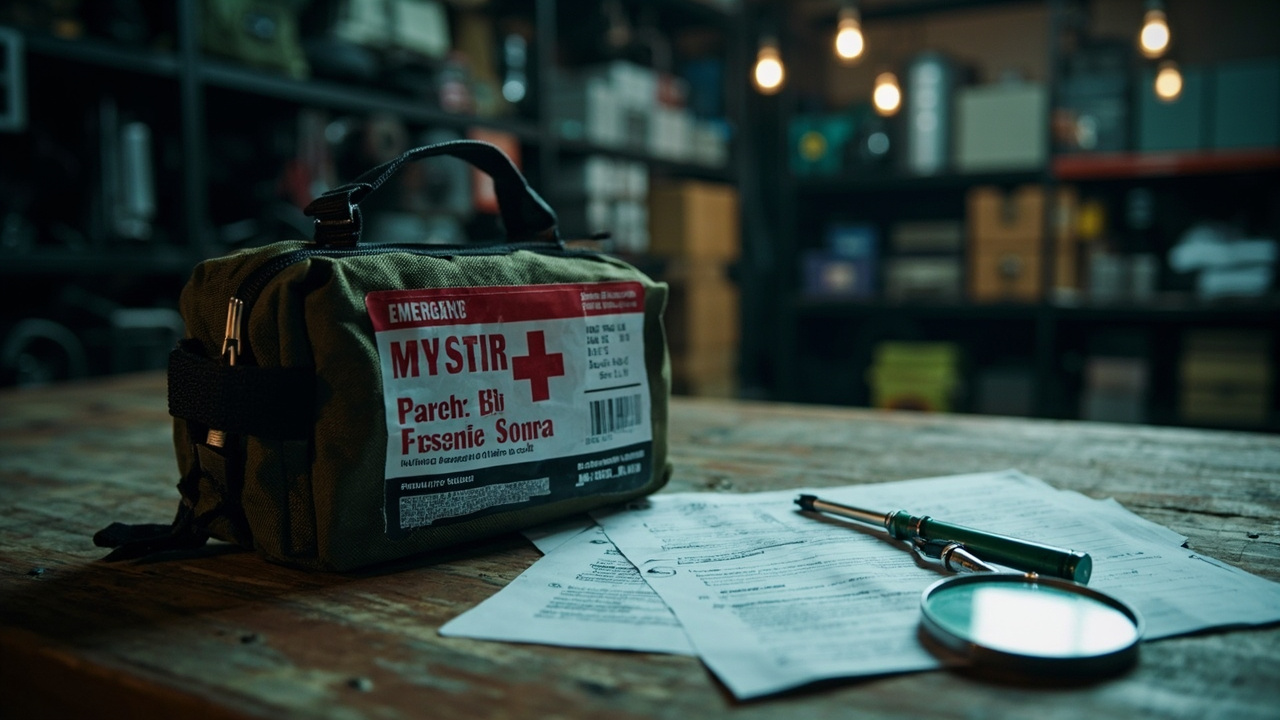
TL;DR: Integrated MedCraft LLC initiated a Class 2 recall on September 25, 2026 for 1,033 FORWARD Gunshot Wound Kits after internal testing linked a kitted sterile pad to possible degradation and fiber shedding near wounds.
Recall initiated September 25 for gunshot wound kits
Integrated MedCraft LLC initiated the action on September 25, 2026, according to the FDA record titled Class 2 Device Recall FORWARD Gunshot Wound Kit. The record identifies the product as FORWARD Gunshot Wound Kit, Model AFT-GSW, classified as a first aid kit without drug under Product Code OHO.
The same FDA record lists Recall Event ID 99948, Recall Number Z-0147-2027, and FEI Number 3030078769 for the recalling firm. The firm is listed as INTEGRATED MEDCRAFT LLC, 1 Sinco Pl Unit A10, East Hampton, CT 06424-2129. The contact for additional information is listed as 860-836-4692.
FDA status in the record is shown as Open, Classified. The FDA explanation in the database notes that a record is created when a firm initiates a correction or removal action, is updated if FDA identifies a violation and classifies the action, and is updated again when the recall is terminated.
For preppers who stock trauma kits for vehicle, home, and off-grid use, the initiation date matters. September 25, 2026 is the date the firm began the correction process, not the date a database entry later became searchable. Guidance summarized by SIGMedical.net in Finding a Medical Device Recall: Model, Lot, and Serial Number explains that the posting date is not the start date and that a company may already have contacted customers before FDA classification appears online.
Why the kits were recalled
The manufacturer reason for recall states the action is a subrecall of a kitted device from SafeGuard Medical. According to the FDA record, internal testing identified an issue affecting the device's sterile pad, potentially causing the sterile pad to degrade over time.
The stated concern is that degradation may cause remnants of the nonwoven pad material to dislodge on the wound or in close proximity to the wound. That language is central for preparedness planning because wound-packing and covering materials are expected to remain intact during direct pressure and transport to care.
The FDA-determined cause is listed as component change control. Per FDA policy noted in the record, recall cause determinations are subject to modification up to the point of termination of the recall.
The product classification does not include a drug component. The FDA record describes the classification as first aid kit without drug. For kit builders, that distinction helps separate this action from recalls involving hemostatic drugs, antiseptics, or other medicated components.
Which lots and codes are listed
The Code Information field in the FDA record lists Model ATF-GSW and UDI-DI 00850056748063. It then lists 21 lot numbers. Anyone checking storage should compare packaging marks character by character rather than relying on the kit name alone.
The listed lots are:
- IMC-00000024, IMC-00000034, IMC-00000053, IMC-00000056, IMC-00000076
- IMC-00000081, IMC-00000082, IMC-00000083, IMC-00000084, IMC-00000085
- IMC-00000094, IMC-00000148, IMC-00000149, IMC-00000152, IMC-00000153
- IMC-00000154, IMC-00000173, IMC-00000174, IMC-00000179, IMC-00000186, IMC-00000187
The article Finding a Medical Device Recall: Model, Lot, and Serial Number advises first writing down the device name, the company, and any model, lot, serial, or UDI numbers on the label or package. It then advises searching the FDA Medical Device Recall Database by product name or company and comparing those numbers to the record's Code Information field.
That same guide explains the identifiers in practical terms. Model identifies which design is held. Lot or batch identifies the production group. Serial identifies one individual device where assigned. A Unique Device Identifier has a fixed device identifier portion for labeler and model, plus a production identifier portion that can include lot, serial, expiration, or manufacture date where shown on the label.
If numbers are missing, unreadable, or the outer package was discarded, the guide states to ask the recalling company or health care provider before making a change. That step is especially relevant for repackaged trauma supplies, where an outer kit box may carry the lot while inner pouches do not.
How many kits and where they went
Quantity in Commerce is listed as 1,033. Distribution is described as U.S. nationwide distribution in the states of GA and VA.
That combination means the total volume is limited but geographically concentrated in the listed states, with possible forward movement if buyers traveled, relocated, resold, or deployed kits elsewhere. The recall instructions explicitly address further distribution, which indicates downstream movement was anticipated.
For group preparedness networks, training caches, church safety teams, and family retreat storage, the practical task is to trace purchases rather than assume location. Check purchase records, vendor emails, range-bag contents, vehicle kits, and donated supplies. A kit bought in Georgia or Virginia may now sit in another state.
The FDA database coverage described by SIGMedical.net includes recalls classified since November 2002 and allows searching by product name, product code, recall class, recalling firm, recall date, reason for recall, and premarket number. Each record includes fields such as Product, Code Information, Manufacturer Reason for Recall, Action, and For Additional Information Contact.
What customers were told to do
The Action section states that on September 25, 2026, URGENT MEDICAL DEVICE RECALL letters were sent to customers. That mailing is the operative customer notice for the archive date.
The listed instructions direct customers to immediately discontinue use of any product matching the affected items and lot numbers and to inspect inventory for affected product. Customers with no matching product are directed to complete the acknowledgment receipt form and indicate that they have none of these products in inventory.
A copy of the urgent recall notice from Safeguard Medical was included for reference, according to the Action description. Customers holding affected product are directed to complete the attached Acknowledgement and Receipt Form and return it to [email protected]. The instructions request response within 30 days from the date of the notice to ensure timely product replacement.
Customers without recalled product in stock are directed to check the appropriate box on the form. Customers who further distributed listed items are directed to provide their customers with a copy of the notification and request that they return affected product directly to the distributor or directly to Integrated MedCraft.
The FDA record does not instruct consumers to discard material in ordinary trash, attempt a field repair, or continue using a matching lot while awaiting replacement. The stated instruction for matching inventory is to discontinue use and follow the return process.
What Class 2 means for risk planning
The title assigns this action as Class 2. Plain-language guidance in Finding a Medical Device Recall: Model, Lot, and Serial Number states that Class II products may cause a temporary or reversible health problem, or there is a slight chance of serious health problems or death. It contrasts Class I, involving a reasonable chance of serious health problems or death, and Class III, where the product is not likely to cause health problems or injury.
That classification is about probability and severity, not a guarantee of outcome for any individual kit. For planning, treat a Class 2 wound-care defect as a reliability failure in a high-stakes use case. A shedding pad does not help control bleeding, protect tissue, or maintain a clean field.
The same guide notes that a recall does not always mean every user must stop using a product or return it. Sometimes a device needs checking, adjustment, or correction where used or sold. In this specific recall, however, the manufacturer action does call for discontinuing use of matching lots, inspecting inventory, and returning affected product through the stated process.
The guide also distinguishes correction, where the problem is fixed where the device is used or sold, from removal, where the device is taken away from where it is used or sold. The Integrated MedCraft instructions combine inventory control, customer notification, return, and replacement, which spans both concepts in operational terms.
How to check a kit without creating a new risk
Start without opening sterile packaging. Read the exterior label for FORWARD Gunshot Wound Kit, the model designation, UDI-DI, and lot number. Photograph the label for records. Compare the lot against the 21 numbers above.
Keep the kit dry, intact, and segregated until status is confirmed. Do not open a sterile pad to inspect for shedding, because opening destroys sterility and does not resolve whether the lot is affected. If the label matches, follow the recall path: stop use, complete the acknowledgment form, and contact the company at the listed phone or email.
If the label does not match, retain the documentation. Keep the lot photograph with purchase receipts and storage-location notes. If confirmation is impossible because packaging is damaged or missing, use the For Additional Information Contact details rather than guessing.
For medical problems, the SIGMedical.net guide states that device problems causing a medical emergency require contacting local emergency services first. It also states that FDA encourages voluntary reports through MedWatch online or by phone at 1-800-332-1088, and that questions about personal care should go to a health care provider.
Preparedness takeaway for trauma-kit owners
This recall shows why lot-level tracking belongs in every medical preps routine. Brand, model, lot, UDI, purchase date, vendor, storage location, and expiration should be logged when a kit enters inventory, not after a notice arrives.
Owners should also avoid treating one trauma kit as lifetime gear. Pads, seals, adhesives, and packaging age. Rotation, climate control, inspection of outer pouches, and replacement of time-sensitive components reduce the chance that a stored kit fails during use.
Finally, replacement planning should preserve capability. While affected lots await return and replacement, maintain separate, unaffected bleeding-control supplies under normal storage and training rules. Do not cannibalize a recalled kit for parts, because the recalled component is the risk driver named in the record.