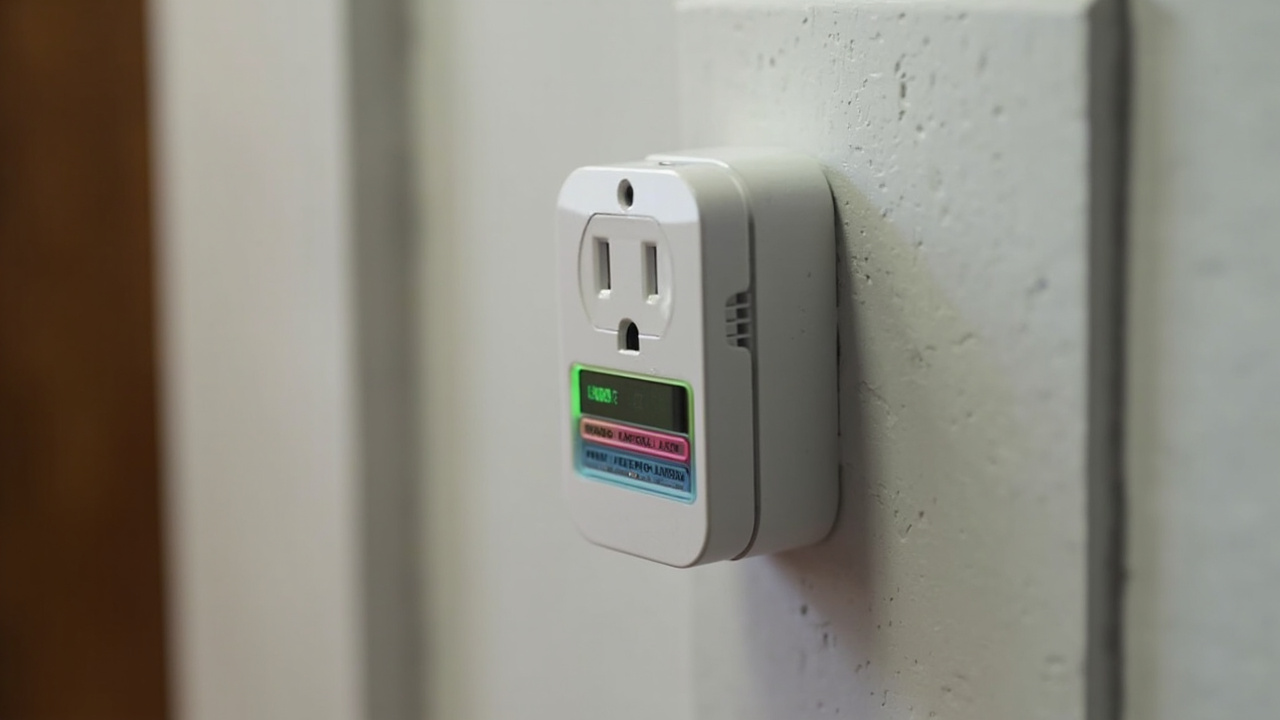
TL;DR: The U.S. Consumer Product Safety Commission warned on August 20 to immediately stop using plug-in 4-in-1 model KH158 natural-gas and carbon-monoxide detectors after 91 failure-to-alarm reports.
The federal warning covers approximately 376,974 detectors sold under 18 brand names from June 2024 through July 2026 for $13 to $140, according to the ASUINews report titled CPSC Warns Consumers to Stop Using KH158 CO Detectors.
What the August 20 warning orders
The U.S. Consumer Product Safety Commission told consumers on August 20 to immediately stop using a plug-in carbon-monoxide detector sold under 18 separate brand names.
The agency issued the message after receiving 91 reports that the devices failed to sound an alarm in the presence of gas or carbon-monoxide leaks.
The agency is treating the announcement as a formal safety warning rather than a recall because the manufacturer has declined to cooperate.
The manufacturer is identified as Shenzhen Kanghua Shengshi Industrial Co., Ltd., doing business as KH Alert, of China.
The agency is urging consumers not to purchase or resell the detectors and to dispose of any unit already installed in a home.
The commission's warning does not include a refund or exchange program, since the manufacturer has not agreed to any consumer remedy.
There is no repair option and no manufacturer-provided remedy, according to the Super Fast Electric analysis titled Carbon Monoxide Detector Recall 2026: What to Do Now.
Which product is named
The product is described as a 4-in-1 Plug In Natural Gas and Carbon Monoxide Detector sold under model number KH158.
The detectors are marketed for general home use and claim to measure temperature and humidity in addition to detecting carbon monoxide and combustible gas.
The affected detector is a plug-in combination unit with a digital display, a SELF-TEST button, and POWER, FAULT, and ALARM indicator lights.
The affected device detects gas and carbon monoxide while displaying temperature and humidity, according to the Mechanical Mentor guide titled Is Your Plug-In CO Detector on the CPSC Warning List?
CPSC describes the affected detector as a white, gray, or black plug-in unit with a digital display.
Its front has a SELF-TEST button and three labeled lights.
The power indicator is labeled POWER and is green.
The fault indicator is labeled FAULT and is yellow.
The alarm indicator is labeled ALARM and is red.
The device was marketed as performing four functions: carbon-monoxide detection, combustible or natural-gas detection, temperature display, and humidity display.
The official CPSC warning identifies model KH158.
Consumer Reports has also documented the hyphenated KH-158 spelling.
The hyphen is treated as a formatting difference, not evidence of a different model.
The detectors were sold individually and in multipacks.
CPSC says it can fail to alarm when gas or carbon monoxide is present.
The agency is aware of 91 reports of units failing to alarm despite dangerous gas or carbon-monoxide concentrations in the room.
Why one model appears under 18 names
Shenzhen Kanghua Shengshi sold the identical KH158 unit under brand names including Hembisen, KH Alert, JNHCD, Sooguard, NICGOL, ARIKON, KOABBIT and YOJOCK, among others.
The same hardware was distributed across 18 unrelated-looking product listings.
A retailer or marketplace that tracks safety complaints by storefront name rather than by manufacturer and model number has no straightforward way to see that all 18 trace back to one factory.
The warning applies to anyone who owns a unit with model number KH158, regardless of the brand name on the housing.
The CPSC lists the following brand names associated with the affected model: ARIKON, ELECOIN, FLUNGSKY, HAOKESITE, Hembisen, JNHCD, KAKIMENT, KH Alert, KOABBIT, NICGOL, NORJAN, OUMEBIU, Sooguard, Vilfet, Vzmcov, WESHLGD, XLA Alert, and YOJOCK.
A listed brand without KH158 is not enough to establish coverage.
One brand can appear on multiple products, while the warning identifies a particular model.
The strongest identifying evidence is the model number printed on the detector, its packaging, or an order-specific record.
Consumers are directed to look for either spelling, KH158 or KH-158.
The model number is the key identifier, not the brand name, because the same product was sold under 18 different labels.
Those traits can help identify a unit whose paperwork is incomplete, but other detectors can have the same general shape, display, test button, and indicator lights.
A detector should not be classified from a photograph or marketplace listing alone.
Physical labels and order-specific records carry more weight than appearance.
If the label is faded or missing, the original box, instructions, receipt, confirmation email, photographs, seller messages, and order history should be searched.
Both KH158 and KH-158 should be searched in those records.
An invoice or archived description tied to an order is stronger evidence than a seller's current generic listing.
The retailer, price, and sales period may help locate an old order, but none proves that a detector is covered without the model match.
Where and when 376,974 units were sold
CPSC says roughly 376,974 units moved through Amazon, eBay, AliExpress, Micro Center and Snapklik between June 2024 and July 2026.
Prices ranged from $13 to $140.
The detectors were sold individually and in multipacks on Amazon, eBay, AliExpress, Micro Center, and Snapklik for prices ranging from $13 to $140.
That price range and two-year sales window mean the affected units are distributed across a wide cross-section of homes.
The warning applies to homeowners, renters, landlords, and property managers who purchased a combination natural-gas and carbon-monoxide detector online between June 2024 and July 2026.
Any homeowner, renter, landlord, or property manager who purchased such a detector online in that period should check the devices.
If a detector carries any of the listed names and has a digital display with a SELF-TEST button, the model number printed on the back of the unit or on the original product listing in order history should be checked.
Why this is a warning instead of a recall
CPSC does not have unilateral authority to order a recall — it can only issue one if a manufacturer agrees to cooperate, or after a lengthy administrative or court process.
Shenzhen Kanghua Shengshi has not agreed to a recall of the KH158, which left the commission with a public warning as its only immediate tool.
This is not a traditional recall where the manufacturer cooperates and offers replacements.
The manufacturer has refused to work with federal regulators on a recall or provide any consumer remedy.
When a manufacturer refuses to cooperate, the CPSC issues a unilateral safety warning rather than a negotiated recall.
The practical effect for consumers is that there is no replacement program, no refund mechanism, and no corporate entity accepting responsibility.
Consumers absorb the full cost of replacing the device.
In a standard recall, consumers can sometimes continue using the product until a replacement arrives.
Here, the CPSC's guidance is unambiguous: stop using the detector immediately and dispose of it.
Consumers should not wait for a remedy that is not coming.
Earlier reports tied to Hembisen KH-158
Consumer Reports had flagged the same hardware months earlier.
The organization tied a plug-in detector sold under the Hembisen brand name, labeled model KH-158, to complaints describing four people sickened by exposure the device failed to catch.
Those complaints included a 15-year-old and a 14-year-old treated in February and a 60-year-old man hospitalized in March.
Amazon pulled the listings from sale while it investigated the reports, according to Consumer Reports' account of the incident timeline.
Consumer Reports also summarized the failure reports and sales information.
Second detector warning issued the same day
The same day, August 20, 2026, the CPSC also issued a separate warning on TJTFJS 2-in-1 carbon-monoxide and smoke detectors, model TJ00907, for the same fundamental problem: failure to detect.
Two detector warnings in a single day from the same agency underscores how widespread the problem of uncertified or poorly manufactured detection devices has become in the online marketplace, according to that Super Fast Electric analysis.
How to replace an affected unit
The agency's guidance for replacing an affected unit follows its standard recommendations for combination alarms.
Carbon-monoxide detectors belong on every level of the home, plus one outside each separate sleeping area.
Consumers are advised to choose battery-operated detectors or units with a battery backup, so a power outage does not leave a home unprotected.
Buyers are advised to buy only detectors certified to the UL 2034 safety standard.
The KH158 warning did not specify whether the affected units carried that certification.
Detectors should be tested on the schedule printed in the manual, not on an ad hoc basis, and batteries swapped at the same time.
A marketplace title, star rating, familiar case, or generic carbon-monoxide detector claim is not the same as certification to UL 2034.
A replacement shows the requested certification evidence when it has both a UL Listed or ETL Listed mark and documentation identifying UL 2034.
The package or official documentation should be checked for that evidence.
Consumers who believe they own an affected detector, regardless of which of the 18 brand names appears on the packaging, can report incidents or injuries to CPSC through SaferProducts.gov.
If carbon-monoxide exposure is suspected, go outside to fresh air and call 911.
Do not wait for an identification check when exposure is suspected.