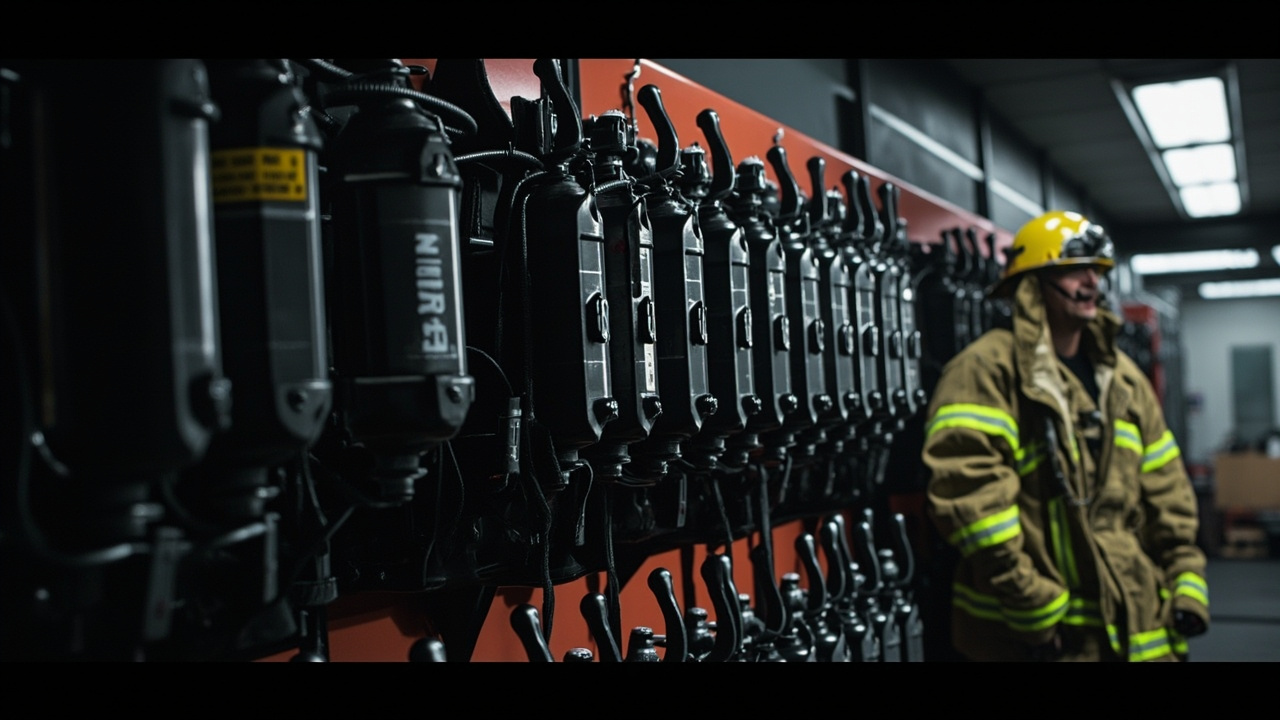
TL;DR: A city council approved budget amendments to accept FEMA Assistance to Firefighters Grant funds for 21 breathing air packs and revised an earlier procurement authorization to match the final invoice, according to Citizen Portal.
What did the council approve on Sept. 21?
The council approved budget amendments to accept FEMA AFG grant funds for 21 air packs, according to Citizen Portal.
The same action adjusted a previous procurement authorization to match the final invoice for the equipment purchase, according to Citizen Portal.
The report was published on Sept. 21, 2026, according to Citizen Portal.
City staff told the council the city had received FEMA AFG grant funds to purchase 21 sets of breathing air packs for the fire department, according to Citizen Portal.
The equipment is described as breathing air packs for fire department use, according to Citizen Portal.
The decision combined grant acceptance, budget reconciliation, and procurement alignment in one council action, according to Citizen Portal.
For preparedness readers, the core lesson is administrative: grant-funded gear still requires local budget action before purchase and payment can close cleanly.
How much did the 21 air packs cost?
The purchase totals just over $200,000, according to Citizen Portal.
The grant covers about 80% of the cost, according to Citizen Portal.
The article summary describes the federal share as covering approximately 80% of equipment cost, according to Citizen Portal.
That structure leaves a local share for the remainder, which is common in federal fire grants that require a match.
Staff requested a $170,000 increase to grant revenue assumptions, according to Citizen Portal.
Staff also requested a $42,700 city match, according to Citizen Portal.
The two figures were presented as the amounts needed to reconcile timing and invoice differences, according to Citizen Portal.
In practical terms, the $170,000 revenue adjustment recognizes expected federal reimbursement in the city budget.
In practical terms, the $42,700 match recognizes the city obligation tied to the same purchase.
The staff explanation linked both numbers to timing and invoice differences, according to Citizen Portal.
Timing differences can occur when grant awards, budget assumptions, purchase orders, delivery, invoicing, and reimbursement do not fall in the same accounting period.
Invoice differences can occur when the final billed amount does not exactly match the earlier authorized estimate.
The council action resolved both issues by updating revenue expectations and matching local funds, according to Citizen Portal.
For departments planning similar purchases, the message is to track the authorized amount, the invoiced amount, and the reimbursable amount as three separate numbers.
What is an AFG-funded air pack purchase?
The purchase involved 21 sets of breathing air packs, according to Citizen Portal.
A practical fire-service guide describes SCBA needs in similar terms as packs, masks, cylinders and related equipment, according to StationClipboard.
That guide lists SCBA alongside PPE, apparatus, communications, hose, nozzles, rescue equipment, training, staffing, recruitment, fire prevention, facilities, and technology as common grant project areas, according to StationClipboard.
The guide identifies the Assistance to Firefighters Grant as primarily supporting equipment, PPE, training, vehicles, and other firefighter and public-safety needs, according to StationClipboard.
AFG is described separately as FEMA's main equipment grant for fire departments, according to a firefighter-written AFG checklist guide published Sept. 21, 2026.
That checklist guide says AFG pays for equipment, protective gear, emergency vehicles, training and other resources that protect the public and department members, according to MadeYouAWebsite.
The wording reflects FEMA's own description of eligible uses, according to MadeYouAWebsite.
For emergency-preparedness planning, breathing air packs support entry, search, rescue, and fire attack where smoke and toxic products make unprotected breathing unsafe.
Replacement matters because departments face aging PPE, SCBA replacement needs, older apparatus, obsolete radios, and training costs, according to StationClipboard.
The guide notes that fire department budgets are tight and finding room for all replacement needs can be difficult, especially for smaller departments, according to StationClipboard.
That budget pressure is why grants can help with equipment, PPE, SCBA, apparatus, training, staffing, recruitment, fire prevention, and other eligible needs, according to StationClipboard.
How large was the FY 2025 AFG round?
For the fiscal year 2025 round, FEMA announced $291.6 million for AFG, according to MadeYouAWebsite.
The same round included SAFER for staffing and Fire Prevention and Safety grants, according to MadeYouAWebsite.
Congress appropriated $324 million for the Assistance to Firefighters Grant Program in FY 2025 through Public Law 119-4, according to Granted AI.
FEMA split that total into $291.6 million for roughly 1,800 AFG awards and $32.4 million for approximately 100 FP&S awards, according to Granted AI.
Those funds must be obligated by Sept. 30, 2026, according to Granted AI.
FEMA reported receiving 8,426 AFG applications and 758 FP&S applications in FY 2025, according to Granted AI.
The figures show a competitive national program with thousands of department requests for a limited number of awards.
They also show why local councils must act quickly once an award arrives: federal obligation deadlines and local procurement rules both apply.
When was the application window?
All three programs opened on May 19, 2026 and closed on June 22, 2026, according to MadeYouAWebsite.
The Federal Register notice for the FY 2025 AFG and Fire Prevention and Safety programs describes applications as accepted electronically through FEMA Grants Outcomes at go.fema.gov from May 19, 2026 to June 22, 2026, according to Granted AI.
The checklist guide calls that five-week period short and warns that finding three years of numbers consumes much of the available time, according to MadeYouAWebsite.
The guide recommends gathering records months before FEMA announces the next round, according to MadeYouAWebsite.
Nobody outside FEMA knows the dates of the next round, according to MadeYouAWebsite.
The guide advises watching FEMA's program page for the next announcement rather than relying on prior dates.
What does FEMA ask departments to prepare?
FEMA publishes an AFG application checklist alongside the funding notice, according to MadeYouAWebsite.
The checklist is 18 pages in PDF form, according to MadeYouAWebsite.
Its opening line says collecting the information beforehand will reduce the time and energy needed to complete the application, according to MadeYouAWebsite.
The application asks for incidents for each of the last three calendar years, broken down by incident type, plus mutual and automatic aid given and received, according to MadeYouAWebsite.
It asks for operating budget for the current year and the two prior years, personnel share, and funding sources, according to MadeYouAWebsite.
It asks for civilian fire injuries and deaths and member line-of-duty injuries over three years, according to MadeYouAWebsite.
It asks for every vehicle, front line and reserve, including leased units and units on order, according to MadeYouAWebsite.
It asks for membership totals, Firefighter I qualifications, and EMS levels, according to MadeYouAWebsite.
If turnout gear is requested, it asks how old every set is, year by year, according to MadeYouAWebsite.
It asks for square miles covered, population, seasonal population, and hydrant coverage, according to MadeYouAWebsite.
The checklist instructs applicants to count each incident once and to count only calls where the department was primary responder, with mutual aid counted separately, according to MadeYouAWebsite.
It warns that funding sources must total 100 percent and that the application must remain consistent throughout, according to MadeYouAWebsite.
What administrative steps trip up applicants?
Departments need an active registration on SAM.gov, the federal system used by grant applicants, according to MadeYouAWebsite.
The checklist asks whether registration is current, asks for its expiration date, and directs applicants to confirm the Unique Entity Identifier in SAM.gov, according to MadeYouAWebsite.
Applicants also need an account in FEMA GO, the system used to submit the application, according to MadeYouAWebsite.
The guide recommends checking SAM.gov registration immediately because a lapse is difficult to fix during a five-week window, according to MadeYouAWebsite.
It also recommends confirming that someone in the department can log in to FEMA GO before the window opens, according to MadeYouAWebsite.
The checklist says award recipients will be required to report incidents to the national system, according to MadeYouAWebsite.
That system has changed from NFIRS to NERIS, the National Emergency Response Information System, according to MadeYouAWebsite.
NFIRS stopped accepting incident reports dated after Dec. 31, 2025, and FEMA said it was to be fully offline by February 2026, according to MadeYouAWebsite.
Departments that have not moved to NERIS should address reporting access before an award, according to MadeYouAWebsite.
The application includes written sections on financial need, community description, project description, cost-benefit, and statement of effect, according to MadeYouAWebsite.
Each narrative section is capped at 4,000 characters including spaces, or roughly one page, according to MadeYouAWebsite.
A Micro Grant option is capped at $50,000 in federal money, according to MadeYouAWebsite.
A vehicle request is a separate application from equipment, according to MadeYouAWebsite.
Why did procurement authorization need adjustment?
The council adjusted previous procurement authorization to match the final invoice, according to Citizen Portal.
Procurement authorization sets the maximum amount a department may spend or commit under a prior vote.
A final invoice states the amount actually billed after delivery, configuration, freight, and any price changes.
When those two numbers differ, the authorization must be reconciled so auditors can see approval for the amount actually paid.
Staff tied the requested $170,000 revenue increase and $42,700 city match to timing and invoice differences, according to Citizen Portal.
That framing indicates the fix was accounting alignment, not a new equipment selection.
The underlying equipment quantity did not change in the report: 21 sets remained the approved quantity, according to Citizen Portal.
The underlying funding model did not change in the report: about 80% federal coverage remained the described share, according to Citizen Portal.
The total remained just over $200,000, according to Citizen Portal.
For preparedness buyers, the takeaway is to keep purchase authorization flexible enough for final freight, fit testing, accessories, and vendor price updates, while keeping council approval exact at closeout.
What should other departments copy from this case?
Start with the problem definition recommended in the StationClipboard guide: identify exactly what is needed before searching for a grant, according to StationClipboard.
The guide suggests asking how many units exist, how old they are, what condition they are in, how many firefighters use them, what problems are occurring, what replacement would cost, and what happens without replacement, according to StationClipboard.
Do not assume an item is eligible because the department needs it; check current grant guidance before building an application, according to StationClipboard.
Grant periods and requirements change, so verify deadlines, award limits, and matching requirements with FEMA or the offering agency, according to StationClipboard.
Download FEMA's checklist and assign call-volume pages to records staff and budget pages to the treasurer, according to MadeYouAWebsite.
Request three calendar years of incident counts by type, three years of budget with funding sources as percentages, and confirmation of NERIS reporting, according to MadeYouAWebsite.
Draft the community description early because it changes little year to year, according to MadeYouAWebsite.
Keep narratives short and focused because each written section allows about one page, according to MadeYouAWebsite.
Sources cited in this report include Citizen Portal, StationClipboard, MadeYouAWebsite, and Granted AI.
Sources referenced
- Council approves budget amendment and procurement adjustment for FEMA AFG air packs | Citizen Portal (https://citizenportal.ai/articles/10134765/kansas/leavenworth-county/tonganoxie-city/council-approves-budget-amendment-and-procurement-adjustment-for-fema-afg-air-packs)
- Fire Department Grants: A Practical Guide for 2026 (Step by Step) - StationClipboard (https://stationclipboard.com/blog/fire-department-grants-a-practical-guide-for-2026-step-by-step)