TL;DR
Five fire departments in Lincoln County, Wisconsin secured nearly $3 million from the Bierman Foundation to replace aging self-contained breathing apparatus and related safety gear, with Merrill receiving just under $1 million and new airpacks expected in service by 2027.
On Oct. 6, 2026, reporting from Merrill, Wisconsin identified the joint award to Merrill, Tomahawk, Russell, Pine River and Corning, according to WJFW. A follow-up report published Oct. 8, 2026 carried the same account from Merrill Fire Chief Josh Klug about the department's approximately 28 breathing units, according to Daily Dispatch. The chiefs sought compatible equipment because they train together and answer some of the same calls.
What was approved in Lincoln County
The five departments in Lincoln County applied for support from the Bierman Foundation and were approved for funding to upgrade safety gear, according to WJFW.
The group includes Merrill, Tomahawk, Russell, Pine River and Corning. The joint approach was deliberate. Klug said the departments work closely together, train together and respond to some of the same calls, so universal and compatible equipment matters for everybody.
The total described in the Oct. 6, 2026 account was nearly $3 million for all departments, with Merrill receiving just under $1 million, according to Klug as reported by WJFW. Another posting of the same WJFW reporting described the total as around $2.9 million for all departments with Merrill receiving just under $1 million.
The award covers safety gear including the 28 SCBA units associated with Merrill. Klug described the equipment as expensive but essential for firefighters in an emergency.
For preparedness readers, the structure of the award is the central lesson. Five separate small departments coordinated one request to one foundation rather than seeking five separate replacements on different schedules. That coordination was tied directly to joint training and joint response in Lincoln County.
Who led the request
Merrill Fire Chief Josh Klug served as the public voice for the joint effort in the reports published Oct. 6, 2026 and Oct. 8, 2026.
Klug spoke about Merrill's inventory in an interview in Merrill, Wisconsin, according to WJFW. He was joined in the underlying assessment by the four other fire chiefs in Lincoln County.
The chiefs came together recently and realized their SCBA units needed to be upgraded soon, according to the accounts. At Merrill, the current units were described as being around 10 years old.
Klug expressed gratitude for the Bierman Foundation support. He said he could not express the sincere gratitude and appreciation for what the foundation had been able to do, that the foundation had treated the departments very well, and that the contribution and funding allows the departments to maintain a cutting edge in the fire service, according to WJFW.
The Daily Dispatch report published Oct. 8, 2026, written by Nancy Valdez, presented the same interview material from Klug about the breathing units. The earlier detailed report was by Ryan Marinaro for WJFW and was dated Oct. 6, 2026.
Why SCBA units drove the decision
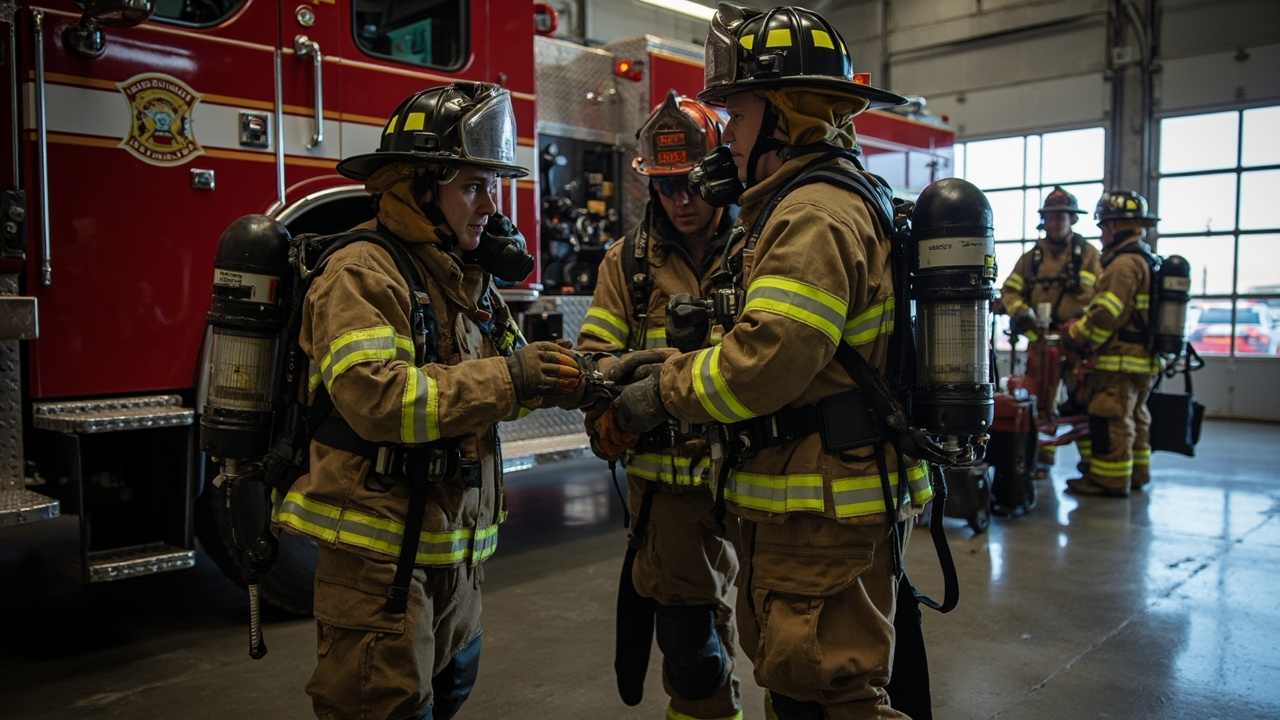
Self-contained breathing apparatus, also called SCBA units or airpacks, were described by Klug as maybe the most important piece of equipment for a firefighter, according to WJFW and Daily Dispatch.
Klug said the units are pretty much the essential piece firefighters need to enter a burning fire environment that is hot and smoky. That description appeared in both the WJFW report and the Daily Dispatch report.
Merrill Fire Department has approximately 28 of the breathing units. Klug said the equipment protects firefighters' respiratory systems and that without those airpacks the crews cannot do what they are trained to do.
The age of the Merrill inventory shaped the timing. With current units at Merrill around 10 years old, the five chiefs concluded an upgrade would soon be needed.
Compatibility was the second driver. Because the Lincoln County departments train together and respond to some of the same calls, Klug said making sure equipment is universal and compatible for everybody is pretty important. The account of joint training and shared calls appeared in both WJFW and Daily Dispatch.
From a gear-readiness standpoint, the account underscores two checks that translate beyond fire stations. First, respiratory protection determines whether trained people can enter a hazardous atmosphere at all. Second, shared gear must connect and operate across teams that may arrive on the same incident.
How the money breaks down
The funding source named in the reporting was the Bierman Foundation, according to WJFW.
The five-department total was described as nearly $3 million, with Merrill's share at just under $1 million, according to Klug. The alternate posting of the WJFW story put the same county total at around $2.9 million, again with Merrill at just under $1 million.
No other dollar breakdown by department for Tomahawk, Russell, Pine River or Corning was stated in the sourced accounts. No tax increase, loan term, or municipal match was stated in the sourced accounts.
Klug described the SCBA equipment as expensive, which explains why a coordinated foundation award mattered for departments of this size. The reporting did not list a per-unit price or a manufacturer.
Klug also said the departments will be able to re-purpose and re-sell the current units and use those funds for the department, too, according to WJFW. That resale and reuse expectation was presented as an additional benefit after replacement, not as part of the foundation total.
Readers tracking local resilience funding should note the actor and status precisely. The departments applied and were approved for Bierman Foundation funding, according to WJFW. The reports describe an approval, not a future application round.
When new gear arrives and how long it should serve
Klug said the new SCBA units will be in use at the departments by 2027 and should last at least a decade, according to WJFW.
That timeline gives two planning markers. The in-service target is by 2027. The expected service life is at least a decade after deployment.
The 10-year age of Merrill's current units helps explain the replacement window. Equipment around 10 years old was approaching the point where chiefs sought new stock with a fresh decade-long service expectation.
The plan to re-purpose and re-sell the current units also affects the transition. According to WJFW, Klug said recovered funds from those older units could be used for department needs.
No delivery date within 2027, training schedule, or retirement date for the old packs was stated in the sourced accounts. The reporting presents 2027 as the year the new units will be in use, and at least a decade as the anticipated duration.
What this means for household and community preparedness
The Lincoln County case offers a practical template for small-team readiness built entirely on facts stated in the reports.
First, count critical life-safety items. Merrill could state its number as approximately 28 breathing units. A household or volunteer team benefits from the same clarity about how many respirators, cylinders, or masks it actually holds.
Second, track age. The Merrill units were around 10 years old when chiefs flagged replacement. A dated inventory makes it possible to plan before gear fails.
Third, standardize across partners. The Lincoln County chiefs prioritized universal and compatible equipment because they train together and respond to some of the same calls. For neighbors, church safety teams, or mutual-aid groups, shared fittings and shared procedures reduce confusion on scene.
Fourth, pool requests where missions overlap. Merrill, Tomahawk, Russell, Pine River and Corning applied together to the Bierman Foundation and were approved for nearly $3 million in total. One coordinated proposal supported five departments with a common need.
Fifth, plan the afterlife of old gear. Klug said current units could be re-purposed and re-sold with proceeds supporting department needs, according to WJFW. Documenting condition and retaining accessories can preserve residual value.
None of those steps requires a foundation grant to begin. An inventory count, an age list, and a compatibility check are low-cost actions that mirror the assessment Klug and the four other chiefs completed before applying.
Archive note
This retrospective archive summarizes reports available by Oct. 8, 2026 in UTC. It uses the Oct. 6, 2026 WJFW reporting by Ryan Marinaro for funding totals, department names, timeline, and resale plans, and the Oct. 8, 2026 Daily Dispatch report by Nancy Valdez for confirmation of Klug's statements about Merrill's SCBA inventory and interoperability need. Plans described for 2027 and for a service life of at least a decade are reported as plans stated by Klug, not as outcomes known by that day.
Sources referenced
- Lincoln County fire departments receive grant to upgrade safety gear | Local News | wjfw.com (https://www.wjfw.com/news/local/lincoln-county-fire-departments-receive-grant-to-upgrade-safety-gear/article_6e84828b-bea3-4004-9b8d-b144e9e1b78e.html)
- Lincoln County fire departments receive grant to upgrade safety gear - Daily Dispatch (https://dailydispatch.com/fire-news/wisconsin/lincoln-county-fire-departments-receive-grant-to-upgrade-safety-gear/)