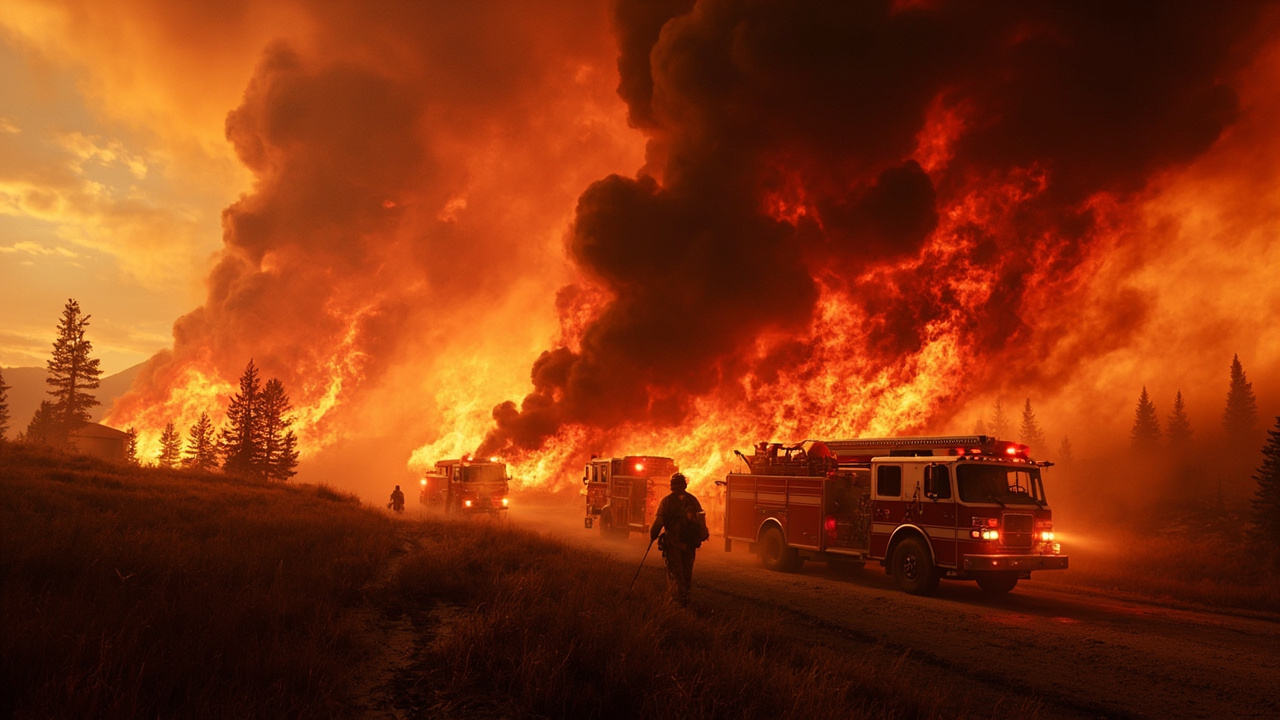
TL;DR: Crews report too few people and engines as 8.5 million acres burn
Fire crews across the United States describe short staffing and missing equipment during a wildfire season that burned a record 8.5 million acres by mid-September 2026, according to CBS News.
Five senators warned on Sept. 14, 2026, that the U.S. Forest Service and U.S. Wildland Fire Service had spent more than $6 billion on suppression by Sept. 2, 2026, with peak season expected to continue for at least two more months, according to Homeland Preparedness News.
Spokane Complex Fire shows strain on initial attack
Cody Turcotte, a firefighter with 17 years of experience, arrived in Spokane, Washington, in August 2026 to find only a small number of engines working a house-threatening blaze that had been burning for hours, according to CBS News.
Turcotte traveled with five engines. He said three personnel on one truck faced the task of defending eight homes while embers ignited bushes and porch furniture.
Sixteen hours into the shift, Turcotte said his crew had received no update on additional engines requested for support, according to CBS News. He recalled a supervisor stating that no help would arrive that night and directing the crew to continue working.
The crew later left burning houses to respond to a second nearby ignition because threatened properties there required immediate help, according to CBS News.
The fires Turcotte described became part of the Spokane Complex Fire. That incident destroyed close to 900 structures and burned over 10,000 acres, according to CBS News. Officials described it as the worst natural disaster in the region's history.
Turcotte said large campaign fires were occurring more frequently, according to CBS News. He said responders could still deploy but were stretched thin and shifting available units to cover gaps.
Forest Service lost about 6,000 staff before season
Roughly 6,000 people departed the Forest Service last year through terminations and buyouts, reducing the agency by about 16%, according to federal employment data reviewed by CBS News.
Colorado and Oregon, both central wildland fire states, were among the areas with some of the largest reductions, according to CBS News.
The reductions followed earlier departures linked to pay and hours, with personnel leaving for other organizations, according to multiple current and former agency firefighters cited by CBS News.
The cuts last year did not directly target frontline firefighters, according to CBS News. They affected administrative employees who could assist during wildfire operations.
Those support roles included securing authorizations for equipment, land use and water supplies, Forest Service staffers told CBS News.
Justin Brown, a Nevada-based wildland firefighter, said the loss of people in non-fire positions with fire qualifications reduced logistical support, according to CBS News. He said fewer qualified people were available to surge, establish an incident management team and provide operational support.
The Forest Service also lacked many mid-level managers, including fire engine drivers, engineers, operators and captains, according to current employees who spoke to CBS News on condition of anonymity because of concern for their jobs. Those employees said vacancies were covered temporarily by less experienced staff and contractors hired quickly for urgent operations.
KCBX reported that more than 3,000 Forest Service employees were released in 2025 under the Trump administration, and that the agency began a reorganization earlier in 2026.
Record 8.5 million acres ties up national resources
Wildfires burned a record 8.5 million acres in the United States so far in 2026, the largest total by this point in the year since the National Interagency Fire Center began tracking in 1983, according to CBS News.
Because major fires burned for months or crews were pre-positioned near imminent threats, most national firefighters and equipment were committed for extended periods, according to the fire center as cited by CBS News.
Firefighters said inventory was stretched to its limit, with crews or equipment sometimes unavailable for new starts and teams moved from one active wildfire to another, according to CBS News.
At the seasonal peak in August and into early September, about 15,000 firefighting personnel were assigned to active wildfire responses nationwide, according to the fire center as cited by CBS News. That total included federal, state and some international crews.
The Forest Service told CBS News that it employed more operational firefighters during the peak than at any time in five years. It also said it expanded the number of non-fire employees qualified to support wildfire response.
The agency stated on its website that 11,745 wildland firefighters onboard nationwide as of Aug. 17 was not enough capacity to meet needs, according to CBS News.
Senators cite $6 billion spent and staffing gaps
U.S. Sens. Michael Bennet of Colorado, John Hickenlooper of Colorado, Ron Wyden of Oregon, Alex Padilla of California and Adam Schiff of California wrote to Secretary of the Interior Doug Bergum and Secretary of Agriculture Brooke Rollins about preparedness, funding and response plans for the remainder of the season, according to Homeland Preparedness News.
In the letter, the senators said record-breaking high temperatures and historic drought produced catastrophic fires across the West, according to Homeland Preparedness News. They said the fires destroyed thousands of homes, harmed rural community economies, stressed local government budgets, and caused the loss of four wildland firefighters and two pilots.
The senators said the Forest Service and U.S. Wildland Fire Service had spent more than $6 billion fighting wildfires as of Sept. 2, 2026, nearly the entire suppression budget, according to Homeland Preparedness News. A separate report carried by KCBX said some agencies had spent more than 70% of the roughly $6 billion fire suppression budget.
From July 18 to Sept. 4, the national firefighting force remained at preparedness level 5, with federal resources fully committed to wildland fires nationwide, according to Homeland Preparedness News.
The senators wrote that the West was expected to remain in peak fire season for at least the next two months, raising concern that agencies could exhaust funds, according to Homeland Preparedness News.
Incident teams and local attack under pressure
The senators said they were concerned that agencies lacked enough highly qualified personnel, Incident Management Teams and supervisory staff to sustain operations, according to Homeland Preparedness News.
Their offices received reports that teams worked more fires than was safe while using temporary supervisory structures because fully qualified personnel were unavailable, according to Homeland Preparedness News.
The senators also said locally led initial attack was affected by national mobilization, according to Homeland Preparedness News. They said personnel worked repeated or extended assignments.
Jesse Torres, a spokesperson for Cal Fire, said the California agency had not noticed delays in receiving federal support, according to KCBX. Torres credited a statewide mutual aid system and said California did not rely solely on federal resources.
Torres said there had been some lag from federal incident management teams, according to KCBX.
The senators asked what the agencies were doing to reduce firefighter fatalities, according to Homeland Preparedness News. The agencies had reported nine fatalities at the time of the inquiry.
They also asked whether personnel cuts were affecting the ability to staff crews adequately, according to Homeland Preparedness News. The letter gave Bergum and Rollins 10 days to respond.
What this means for households near fire country
Firefighters interviewed by CBS News said new fires did not always receive crews or equipment promptly because resources were assigned elsewhere for long periods.
Turcotte's reassignment from houses still burning to another threatened area illustrates how quickly priorities shifted during overlapping ignitions, according to CBS News.
The senators' warning that peak conditions could continue for at least two more months after early September points to an extended period when national resources remained fully committed, according to Homeland Preparedness News.
For residents, the documented support gaps involved logistical authorizations for equipment, land use and water, plus shortages of qualified supervisors and incident management teams, according to CBS News and Homeland Preparedness News.
Sources referenced
- Firefighters struggle with staffing, equipment shortages amid record wildfire season: "We're running thin" - CBS News (https://www.cbsnews.com/news/firefighters-staffing-equipment-shortages-wildfire-season/)
- Senators sound the alarm on lack of wildfire resources, preparedness - Homeland Preparedness News (https://homelandprepnews.com/stories/84782-senators-sound-the-alarm-on-lack-of-wildfire-resources-preparedness/)