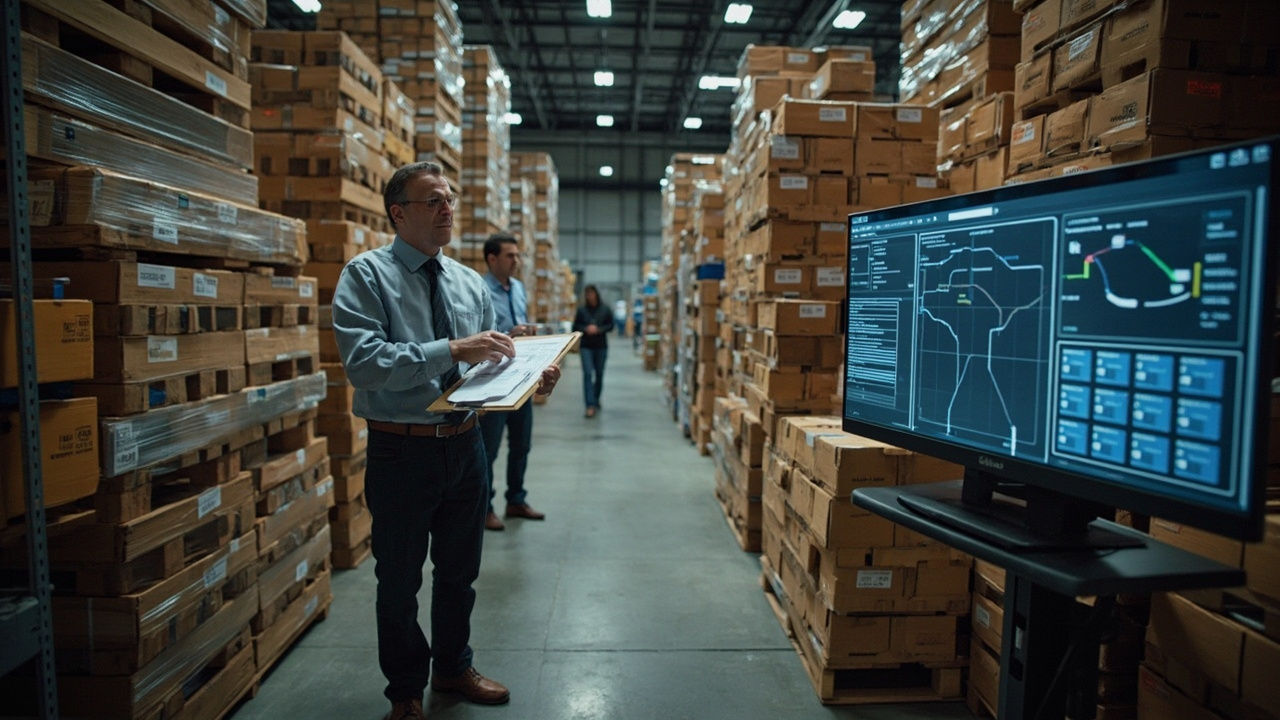
TL;DR: A passing mock recall proves lot-level traceability to every consignee within 24 hours for FDA and within four hours for BRCGS and SQF audits, with a 100% mass-balance reconciliation.
On September 12, 2026, Aurora TIC published its audit-readiness analysis titled Running a Mock Recall: The Gap Analysis FDA Inspectors Expect — and Most Manufacturers Can't Pass, framing the test as a timed performance check rather than a paper review.
According to Aurora TIC, FDA's weekly enforcement reports log hundreds of Class I, II, and III events across pharmaceuticals, dietary supplements, medical devices, and food, and many involved firms held a recall SOP that could not be executed under pressure.
For households that store bulk grains, freeze-dried meals, canned proteins, or private-label supplements, that execution gap decides whether a supplier can name the affected lots quickly or must broaden the action to everything shipped in a period.
What FDA requires when it asks for a recall
Under 21 CFR Part 7, Subpart C, FDA holds statutory authority to request a recall and expects regulated manufacturers to answer with documented, lot-level traceability, according to Aurora TIC.
For Class I recalls, defined as those involving a reasonable probability of serious adverse health consequences or death, FDA conducts recall audit checks covering 100% of direct consignees.
The agency expects notification to those accounts within 24 hours of a recall decision.
That 24-hour phrase is the operational target, not a suggestion to respond within a few business days or when distribution records become available.
FDA's Compliance Policy Guide Sec. 7150.13 states that a firm's recall strategy must address the scope of the recall, the depth of the recall at wholesale, retail, or user level, and the specific actions required at each distribution tier.
Investigators treat those elements as a performance requirement and arrive expecting tested evidence, not an untested procedure.
The related inspection citations fall predictably under 21 CFR 211.196 for drug manufacturers, 21 CFR 117.139 for food firms, and 21 CFR 820.160 for medical device companies.
According to Aurora TIC, the most common recall-related Form FDA 483 finding encountered in consulting work is not a missing SOP but an SOP that was never validated against the data architecture the firm uses today.
Enterprise systems change, third-party logistics providers change, and paper batch records remain in the mix, yet the recall document often reflects an older workflow.
How fast food traceability rules and private standards expect an answer
A second benchmark comes from the food traceability system described by Could You Trace a Contaminated Lot in 4 Hours? Why Mock Recalls Matter.
Four hours is the benchmark for a full lot trace in that framework.
BRCGS Global Standard Food Safety Issue 9 requires sites to test their traceability system at least annually and expects full traceability, from supplier lot through to customer shipment, to be achievable within four hours.
The SQF Food Safety Code likewise requires a recall and withdrawal program to be tested and verified at least annually.
Under FDA's Food Traceability Rule, known as FSMA 204, manufacturers handling foods on the Food Traceability List must be able to provide FDA with an electronic, sortable spreadsheet of traceability records within 24 hours of a request.
The compliance date has been pushed to July 20, 2028, as described in that same analysis.
Traceability Lot Codes and Product Recall Management reports the same July 20, 2028 proposed date and adds that Congress has directed FDA not to enforce the rule before that date.
That publication also states that backward tracking finds the contamination source, forward tracking locates every affected product in distribution, and auditors expect both inside two to four hours.
Manual tracking rarely meets the 24-hour FDA records request or the four-hour trace exercise applied by certification bodies, according to that source.
For buyers of long-shelf-life foods, the practical read is direct: ask whether a supplier traces by lot in minutes through a query or through spreadsheet archaeology over days.
The five structural gaps that stop a mock recall at hour eight
A mock recall is designed to find failure points before FDA finds them, and the goal is not a clean completion.
The first gap is disconnected distribution data.
A manufacturer's enterprise resource planning system may hold lot-level shipment records that do not map cleanly to batch numbers in the laboratory information management system or the certificate of analysis management system.
According to Aurora TIC, reconciling that discrepancy during a mock recall exercise typically consumes 8–12 hours of focused quality-assurance effort.
Under a genuine Class I scenario, that delay is a compliance failure before FDA issues an audit check.
The second gap is incomplete or stale consignee contact data.
21 CFR 7.59 requires that recall audit checks document whether each consignee received notice, returned product, or destroyed it on-site.
When customer master lists carry outdated contacts, a risk that rises in business-to-business accounts with regular buyer turnover, the audit-check documentation carries gaps that investigators cite specifically.
The third gap is missing sub-tier traceability in multi-step distribution networks.
FDA's depth requirement distinguishes wholesale, retail, and consumer levels, and product moving through distributors must be traced through that intermediate tier rather than stopping at direct customers.
Most firms trace to direct accounts reasonably well, while tracing beyond those accounts to the distributor's customers exposes the structural weakness.
The fourth gap is recall communication that does not match actual contact channels.
Recall SOPs often specify written notification by mail or email to all direct consignees, yet timed exercises frequently find the customer master organized by account number rather than by verified email address or named contact.
A technically compliant notification procedure executed against inaccurate contact data produces limited effective communication.
The fifth gap is untested lot quantity reconciliation.
FDA expects that total quantity recalled plus quantity remaining undistributed plus any quantity still held by the manufacturer equals the quantity manufactured in the original batch, net of documented samples, complaint samples, and approved destructions.
Most mock recalls never test that arithmetic, and when tested, distribution adjustments, sample allocations, or complaint pulls that were not captured consistently in the batch record prevent reconciliation.
What a timed exercise that can fail looks like
A mock recall is a timed exercise that simulates a real product withdrawal without shipping anything or alerting the market, as defined in the QTRACA analysis.
The exercise selects a single ingredient or finished-product lot, traces it backward to suppliers and forward to customers, and reconciles every unit.
The recommended format has someone outside the quality team pick the lot at random with no warning.
The team then traces backward to every supplier lot that entered the batch and forward to every customer that received product.
The mass-balance test requires that quantity received or produced reconcile to quantity used, shipped, on hand, and wasted, with a target of 100%.
Timing is recorded throughout, with a hard stop at four hours in that model.
Every gap is recorded, corrective actions are assigned, and the trace is re-run after closure.
The Commport publication adds three traceability lot code assignment points under FSMA 204: when a raw agricultural commodity is initially packed, at first land-based receiving of wild-caught seafood, or when food is transformed.
Once assigned, the traceability lot code stays with the food through the supply chain until the next transformation event.
Lot-level identification keeps a recall proportionate, because without it investigators cannot separate clean product from suspect product and the action widens to cover everything that might be involved.
A joint Grocery Manufacturers Association and Food Marketing Institute research figure cited in that publication places the average direct cost of a food recall at $10 million, before litigation, lost contracts, and depressed sales.
Closing the gaps before peak-season pressure
The QTRACA analysis recommends September, before fourth-quarter production ramps up, as the window to run the exercise while time remains to correct findings.
Fourth-quarter operations bring longer shifts, seasonal staff, and emergency ingredient substitutions, and each condition increases traceability risk.
The recurring floor-level failure points named are seasonal staff receiving goods without recording supplier lot numbers, emergency substitutions that never reach the batch record, rework and part-used pallets that disappear from the mass balance, and finished goods split across orders with no record of which lot reached which customer.
The Commport analysis separately states that mock recalls belong on the annual calendar to prove a site can identify, locate, and account for specific lots inside the required window while maintaining mass-balance records that reconcile.
Retain the exact label or record used to start the test, the scope tested and excluded, actual retrieval and response times, who supplied each answer, and missing evidence with corrective work.
For preparedness buyers, the file to keep is simpler: product name, lot code, purchase date, supplier contact, and any brand notice, stored where it can be found during a recall night without searching email archives.
That household record does not replace manufacturer traceability, but it shortens the decision to hold, return, or destroy product when a Class I notice names specific lots.