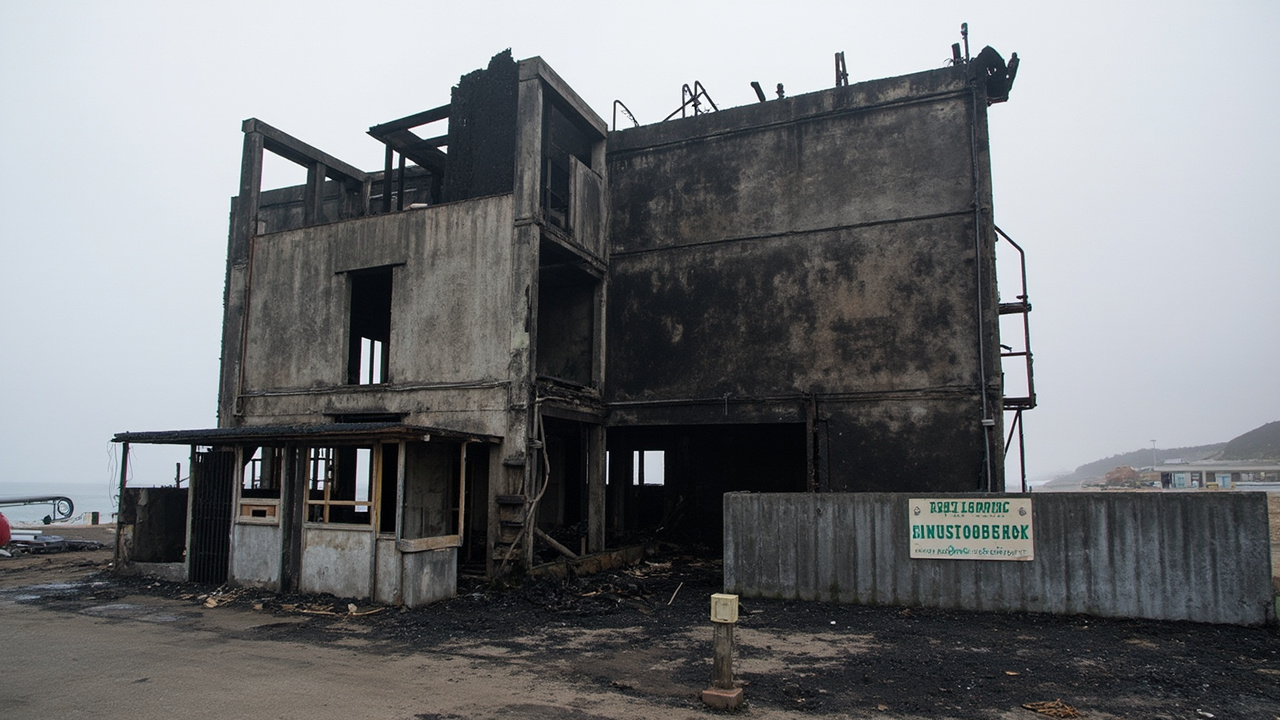
TL;DR: Cafe owners sued Vistra after the January battery fire closed their business across the highway.
Kim and Luis Solano, owners of the Haute Enchilada Cafe in Moss Landing, filed suit against Irving-based Vistra Corp. after the battery energy storage fire that began Jan. 16 and flared again Feb. 18 left their restaurant across Highway 1 indefinitely closed, according to reporting in Citing design flaws, Moss Landing restaurant owners sue Vistra over battery plant fire - Lookout Santa Cruz. The complaint seeks compensatory relief and punitive damages intended to deter future misconduct. The filing makes the cafe owners the second group to sue Vistra Corp. and LG Energy Solution after the January blaze.
The cafe sits directly across Highway 1 from the Moss Landing battery energy storage system in Monterey County, just south of the Santa Cruz County line. The Solanos said they indefinitely closed the business following the Jan. 16 fire and the Feb. 18 flare-up. Co-owner Kim Solano announced the closure of The Haute Enchilada Cafe & Gallery on Feb. 21. The owners are represented by Burlingame-based Cotchett, Pitre & McCarthy LLP.
Who filed and what the suit requests
The plaintiffs and the defendant
The plaintiffs are Kim and Luis Solano, identified as owners of the Haute Enchilada Cafe. The named corporate defendant is Vistra Corp. of Irving, Texas, owner of the Moss Landing battery plant that erupted in flames in January. The suit also names other defendants and battery manufacturer LG Energy Solution of South Korea.
The action was filed on a Thursday and reported the following day. It alleges negligence and carelessness by Vistra and the other defendants. The complaint states:
“Due to the negligence and carelessness of Vistra and the other defendants, plaintiffs face an uncertain and terrifying future.”
The Solanos ask the court for compensatory relief for claimed losses and for punitive damages described as an amount that would deter the defendant from future misconduct. Their lawyers frame continued presence in Moss Landing as a health risk, stating in the filing that remaining there after the disaster could expose the plaintiffs to long-lasting and irreversible health problems.
The $750 gift card dispute
The lawsuit criticizes Vistra for offering what the filing characterizes as hopes, prayers, and a $750 gift card to the Solanos and other affected residents. The complaint states that such a pittance pales in comparison to what has been lost. Vistra later said its focus remained on the safety of personnel and the community while it reviewed the lawsuit.
Vistra responded that testing by the state and by Monterey and Santa Cruz counties did not detect risks to the public water system or soil. The company statement said:
“While we are reviewing the lawsuit, our focus remains on the safety of our personnel and the community.”
Design claims at the center of the case
Open-air concrete structure and 100,000 modules
The complaint alleges design flaws in the facility that housed the now-incinerated 100,000 lithium-ion battery modules. It contends that Vistra knew the open-air, concrete facility had safety problems and had not been properly fireproofed. The filing further alleges that Vistra and LG Energy Solution used a less-stable battery type than was available at the time of construction.
The suit describes the storage method as unsafe, unstable and prone to creating what it calls, in effect, a chemical and heavy metal powder keg if one or more modules failed and caught fire. The filing states on information and belief that Vistra and LG knew the method was unsafe.
NMC versus LFP chemistry
The Moss Landing installation used nickel-manganese-cobalt batteries, known as NMCs. The suit describes those cells as early-stage versions known to be more volatile than lithium-iron-phosphate batteries, known as LFPs, developed later. That chemistry distinction is central to the allegation that a less-stable option was selected.
For households and small businesses near large storage sites, the distinction matters for questions to ask during planning. Residents can note the chemistry stated for a nearby project, the structure type described in permits, and the fire-protection measures listed by the operator. Those three project facts were the three technical points disputed in this filing.
The 300-megawatt Moss Landing site was described as the world's largest battery storage site. It contained nearly 100,000 lithium-ion battery modules, according to EPA, Vistra reach agreement for urgent battery cleanup at Moss Landing fire site - Lookout Santa Cruz. Nearly 55% of the batteries were damaged after the incident. The blaze continued until Jan. 18 and experienced a flare-up a month later on Feb. 18.
Closure, symptoms and second lawsuit
Indefinite closure across Highway 1
The restaurant sits just across Highway 1 from the storage system. Proximity shaped both the business interruption claim and the health allegations. After the January fire and February flare-up, the owners said they indefinitely closed the cafe. The Feb. 21 closure announcement marked the end of regular service at the site pending the outcome of cleanup and litigation.
The complaint says the plaintiffs have suffered and continue to suffer inconvenience, personal discomfort and annoyance. It lists sore throats, sinus irritation, breathing problems, headaches, tiredness, burning in the lungs, nausea, irritation of the skin, rashes and other symptoms not present before the Jan. 16 fire. The suit also alleges emotional distress and harmed mental health.
Earlier Brockovich-linked action
The Solanos' case was the second lawsuit filed against Vistra Corp. and LG following the fire. Earlier in the same month, four Moss Landing residents joined environmental activist Erin Brockovich in a separate lawsuit seeking damages. That sequence shows two parallel damage actions moving forward within weeks of the January fire and February flare-up.
For preparedness planning, the timeline illustrates how a dayslong industrial fire can produce an extended business interruption. The initial fire began Jan. 16, continued until Jan. 18, and flared again Feb. 18. A closure announced Feb. 21 followed both events. Small businesses near industrial sites can document the date of each disruption, the date of any evacuation or closure decision, and the date of any reopening assessment.
Federal cleanup agreement and removal plan
EPA oversight and phased work
The U.S. Environmental Protection Agency reached an agreement with Texas-based Vistra Corp. to remove lithium-ion batteries damaged by the January fire. Under the agreement, Vistra is responsible for paying for and conducting removal and disposal of the damaged batteries, according to Kazami Brockman, federal on-scene coordinator for the EPA.
Under the agreement, Vistra is required to submit detailed plans to the EPA on all aspects of removal and disposal. The federal agency retains complete oversight of the cleanup. If Vistra's work does not meet agency standards, the EPA will take over removal and disposal. Brockman said:
“We’ll be involved with this project the whole time, until the batteries are gone and the threat to human health and the environment is gone.”
Brockman told Lookout that Vistra is taking a phased approach. The company will first ensure the facility is safe and stable for crews to begin removal, with that work tentatively set to begin at the end of July. The EPA anticipated the removal process would take more than a year to complete.
Demolition, brining and air monitoring
Demolition is required to reach different areas of the building damaged by fire. Brockman said structural stability is a major concern when sending people into those areas. Once a battery is removed from the building, it will be treated on site. Electricity from the battery will be released and transferred to a different energy source when possible.
If batteries are less intact, crews will discharge electricity through brining, described as submerging the battery in a water and salt solution to extract the lithium. Brockman added that the batteries will be recycled.
Vistra is also required to implement air monitoring and air sampling around its property during removal. The company must also implement an emergency response plan approved by the federal agency in case fire breaks out during removal. The EPA launched a website where residents can track progress of the removal.
What nearby residents can track next
Adjacent PG&E site and coolant leak
Pacific Gas & Electric halted plans to reopen its Moss Landing facility, located adjacent to the Vistra-owned facility, after crews identified a clamp failure and coolant leak in one of its 256 battery megapacks. PG&E had conducted its own extensive inspection and cleanup before trying to reopen. That halt shows that adjacent systems can remain offline while inspections continue.
Residents monitoring recovery can follow the EPA tracking website, Vistra's detailed removal plans submitted for federal review, air monitoring and sampling results around the property, and the federally approved emergency response plan for the removal period. Those four items are the oversight tools named in the federal agreement.
Business owners can also preserve purchase records, closure notices, medical visits, and correspondence about assistance offers. The Solano complaint specifically disputes the adequacy of a $750 gift card offer. Keeping dated copies of any aid offer, closure announcement, and symptom notes creates a clearer record if a later claim or assistance program requires documentation.