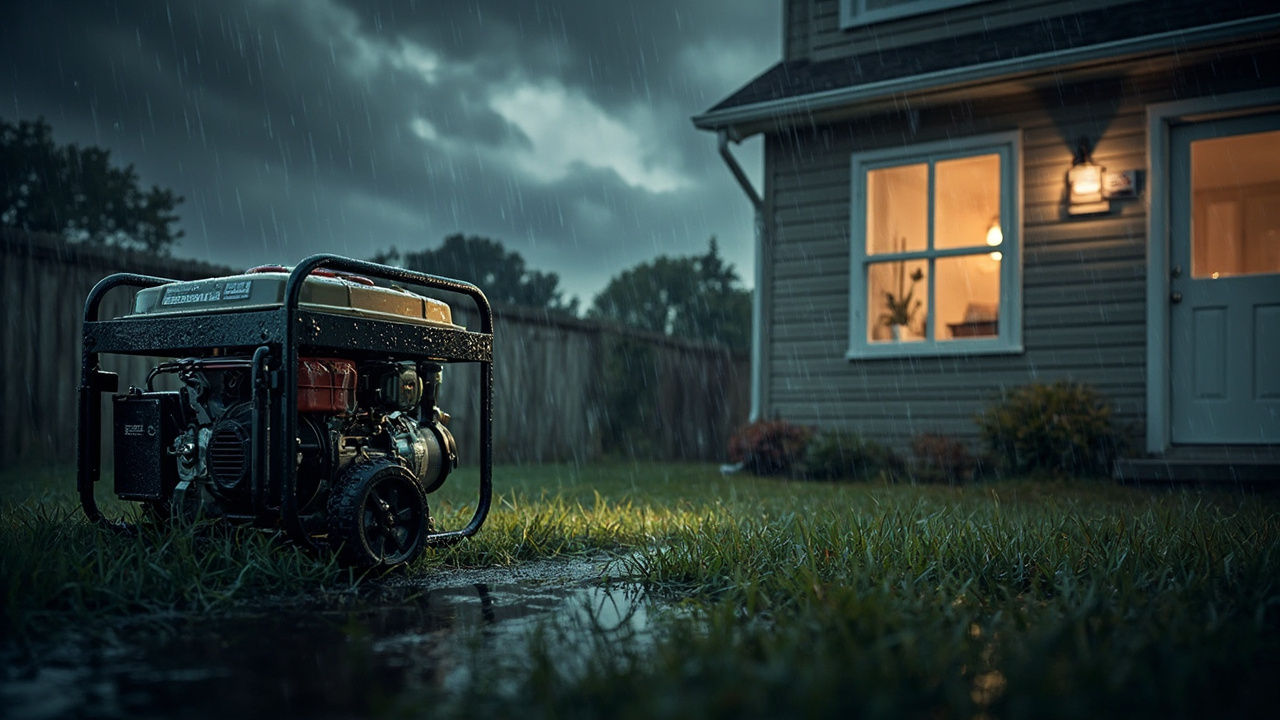
TL;DR: Auburn Professional Firefighters IAFF Local 797 warns that portable generators help during power outages but create risks of carbon monoxide poisoning, electrical shock or electrocution, and fire hazards when used improperly.
What Local 797 posted about portable generators
Auburn Professional Firefighters IAFF Local 797 maintains a portable-generators safety page that was posted on Sep. 19, 2016 and remained listed on Sep. 26, 2026, according to Auburn Professional Firefighters IAFF Local 797.
The page states that portable generators are useful during power outages.
The page states that many homeowners are unaware that improper use of portable generators can be risky.
The page identifies carbon monoxide poisoning as one of the most common dangers associated with portable generators.
The page identifies electrical shock or electrocution as one of the most common dangers associated with portable generators.
The page identifies fire hazards as one of the most common dangers associated with portable generators.
The page presents its guidance under the heading NFPA safety tips.
The page attributes its portable-generators entry to material retrieved in 2016 from the National Fire Protection Association public-education page on portable generators.
Why outages prompt generator use
Local 797 states that downed utility lines can lead to power outages.
Local 797 states that power company blackouts can lead to power outages.
Local 797 states that heavy snow falls can lead to power outages.
Local 797 states that summer storms can lead to power outages.
Local 797 states that many people turn to a portable generator for a temporary solution without knowing the risks.
A Sep. 25, 2026 report from Rutgers University described a nor'easter threatening New Jersey through the weekend with heavy rain, coastal flooding, high winds and potential power outages.
That Rutgers University report stated that the New Jersey Poison Control Center was urging residents to protect themselves from carbon monoxide poisoning.
That Rutgers University report stated that exposures frequently occur when power outages lead people to use generators and other fuel-burning equipment improperly.
Bruce Ruck is identified in the Rutgers University report as managing director of the New Jersey Poison Control Center at Rutgers New Jersey Medical School.
According to the Rutgers University report, Ruck said carbon monoxide poisoning is one of the leading hidden dangers during and after severe weather.
According to the Rutgers University report, Ruck said people often focus on getting electricity back when storms knock out power.
According to the Rutgers University report, Ruck said a single mistake with a generator can have deadly consequences for an entire household, including pets.
According to the Rutgers University report, Ruck said residents should use generators outdoors and take every carbon monoxide alarm seriously.
Operate outdoors and keep exhaust out
Local 797 states that generators should be operated in well ventilated locations outdoors away from all doors, windows and vent openings.
Local 797 states that a generator should never be used in an attached garage, even with the door open.
Local 797 states that generators should be placed so exhaust fumes cannot enter the home through windows, doors or other openings in the building.
The Rutgers University report advises residents to use generators outdoors only.
The Rutgers University report advises placing generators at least 20 feet from homes and neighbors' homes.
The Rutgers University report advises keeping generators away from doors, windows and vents.
The Rutgers University report advises against moving generators into garages to protect them from rain.
The Rutgers University report advises against moving generators into sheds to protect them from rain.
The Rutgers University report advises against moving generators into basements to protect them from rain.
The Rutgers University report advises against moving generators into crawl spaces to protect them from rain.
The Rutgers University report advises against moving generators into enclosed porches or other enclosed areas to protect them from rain.
The Rutgers University report advises using grills, camp stoves and other fuel-burning devices outdoors only.
The Rutgers University report advises against leaving a vehicle running or charging devices using a vehicle parked inside a garage, even if the garage door is open.
Install alarms and act when one sounds
Local 797 states that residents should make sure to install carbon monoxide alarms in the home.
Local 797 states that residents should follow manufacturer instructions for correct placement and mounting height of carbon monoxide alarms.
The Rutgers University report advises installing carbon monoxide detectors on every level of the home and near sleeping areas.
The Rutgers University report advises testing detectors before the storm arrives.
The Rutgers University report advises replacing batteries or units as needed.
The Rutgers University report quotes Ruck stating that working carbon monoxide detectors save lives.
The Rutgers University report states that residents should not ignore a carbon monoxide alarm.
The Rutgers University report states that if a carbon monoxide alarm sounds, residents should leave the area immediately and move everyone, including pets, into fresh air.
The Rutgers University report advises getting everyone, including pets, out to fresh air immediately when carbon monoxide poisoning is suspected.
The Rutgers University report advises calling 911 right away if someone is unconscious.
The Rutgers University report advises calling 911 right away if someone is difficult to wake up.
The Rutgers University report advises calling 911 right away if someone is not breathing normally.
The Rutgers University report advises calling 911 right away if someone is having a seizure.
The Rutgers University report advises against delaying getting outside to fresh air by opening windows or searching for the source of the gas.
The Rutgers University report advises contacting a local fire department or utility company in a suspected exposure.
The Rutgers University report advises calling the New Jersey Poison Control Center at 1-800-222-1222 for immediate medical guidance.
How carbon monoxide exposure presents
The Rutgers University report describes carbon monoxide as an invisible, odorless gas that can cause serious injury or death.
The Rutgers University report states that early symptoms often mimic common viral illnesses, making recognition difficult.
The symptoms listed in the Rutgers University report include headache.
The symptoms listed in the Rutgers University report include dizziness.
The symptoms listed in the Rutgers University report include weakness.
The symptoms listed in the Rutgers University report include nausea.
The symptoms listed in the Rutgers University report include vomiting.
The symptoms listed in the Rutgers University report include chest pain.
The symptoms listed in the Rutgers University report include confusion.
The Rutgers University report states that carbon monoxide poisoning should be suspected if symptoms improve after leaving the building.
The Rutgers University report states that carbon monoxide poisoning should be suspected if multiple people in the home become sick at the same time.
The Rutgers University report states that carbon monoxide poisoning should be suspected if multiple household members become sick at the same time, especially if a pet also appears ill or distressed.
Refuel and store fuel safely
Local 797 states that residents should turn off generators and let them cool down before refueling.
Local 797 states that residents should never refuel a generator while it is running.
Local 797 states that fuel for the generator should be stored in a container intended for that purpose.
Local 797 states that a fuel container should be correctly labeled as such.
Local 797 states that fuel containers should be stored outside of living areas.
What federal data cited by Local 797 showed
Local 797 cites a 2013 Consumer Product Safety Commission report covering carbon monoxide deaths involving engine-driven tools from 1999 through 2012.
Local 797 states that portable generators were involved in the majority of those carbon monoxide deaths.
Local 797 states that portable generators were linked to more than 85 percent of non-fire carbon monoxide deaths associated with engine-driven tools.
Local 797 gives the count as 800 out of 931 deaths during that 14-year period.
Local 797 states that the Consumer Product Safety Commission report found that African Americans died at nearly twice their proportion of the population.
Local 797 states that Consumer Product Safety Commission staff found that 23 percent of generator-related fatalities involved African Americans.
Local 797 states that African Americans make up about 12 percent of the U.S. population, according to the U.S. Census Bureau.
Preparedness checklist drawn from the two sources
Test carbon monoxide detectors before a storm arrives, as advised in the Rutgers University report.
Install carbon monoxide alarms on every level and near sleeping areas, following both Local 797's alarm guidance and the detector placement guidance in the Rutgers University report.
Follow manufacturer instructions for alarm placement and mounting height, as stated by Local 797.
Select an outdoor, well ventilated generator location away from doors, windows and vent openings, as stated by Local 797.
Measure at least 20 feet from homes and neighboring homes when placing a generator outdoors, as advised in the Rutgers University report.
Point exhaust so fumes cannot enter through windows, doors or other openings, as stated by Local 797.
Keep generators out of attached garages, sheds, basements, crawl spaces and enclosed porches, combining the attached-garage warning from Local 797 with the enclosed-area list in the Rutgers University report.
Shut down and cool the generator before refueling, and never refuel while it runs, as stated by Local 797.
Store properly labeled fuel intended for that purpose outside living areas, as stated by Local 797.
Plan in advance to leave for fresh air, call 911 for severe symptoms, contact the fire department or utility, and call 1-800-222-1222 for poison-control guidance, as advised in the Rutgers University report.