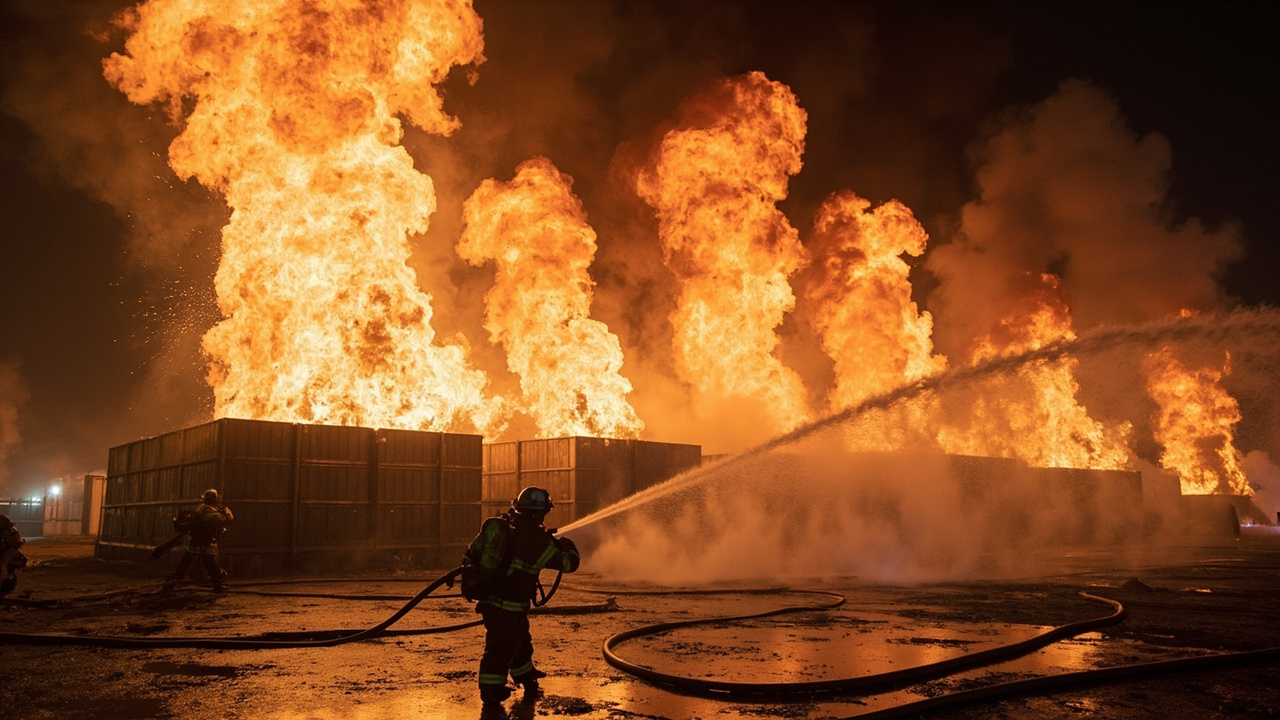
TL;DR: A fire at the Bolster Substation in Peoria, Arizona, involving a lithium-ion energy storage system (ESS), raised urgent safety concerns for firefighters and the public, highlighting the risks associated with these technologies.
Fire Incident Overview
On October 1, 2025, a significant fire broke out at the Bolster Substation located at the Peoria-Glendale border, impacting a 25-megawatt lithium-ion energy storage system managed by Salt River Project (SRP). The fire, which began shortly after 5 PM, was witnessed by multiple fire crews from Glendale, Peoria, and Phoenix who responded swiftly to the scene (Source: AZFamily). Fortunately, no injuries were reported and power outages were avoided as the incident took place with the system offline at the time.
Details of the Incident
According to the Electric Power Research Institute (EPRI), the reservoir of energy stored in these battery systems poses unique challenges during firefighting operations. Firefighters chose a defensive approach, allowing the fire to burn out while cooling adjacent units to prevent spreading flames (Source: EPRI).
Temperature spikes within lithium-ion batteries can create thermal runaway conditions, leading to fires that require specialized techniques for safe management. The fire captain Michael Duffy has been vocal about the risks posed by these installations, especially given the volatile nature of lithium-ion technology which can burn at temperatures exceeding 3,600 degrees Fahrenheit (Source: InvestigateTV).
Historical Context and Safety Enhancements
The October 2025 incident is part of an increasing trend in Arizona, where 2023 saw numerous lithium-ion battery-related fires, fundamentally changing emergency response protocols across the state. The 2019 explosion at the McMicken Battery Storage Facility, which resulted in serious injuries to first responders, instigated a statewide reevaluation of safety standards for battery energy storage systems (BESS) (Source: Fire Engineering).
In response to the evolving technology and associated hazards, Arizona's firefighting community has worked collaboratively to enhance training and safety protocols. This includes the establishment of a statewide data collection initiative to analyze fire incidents involving lithium-ion batteries, which helps guide safety efficiency improvements and code compliance measures (Source: Phoenix Fire Department Document).
Response Protocols and Recommendations
Key findings from investigations into lithium-ion incidents emphasized the need for firefighters to treat these units as energized at all times. Recommendations include:
- Maintain a safe distance from BESS, ideally 150 feet.
- Utilize water streams for extinguishment due to the non-reactive nature of lithium-ion batteries with water.
- Allow fires to burn out if they pose no immediate threat to nearby structures.
- Coordinate closely with utility personnel to ensure accurate hazard mitigation (Source: Phoenix Fire Department Document).
Public Awareness and Recommendations
Community safety is critical as more lithium-ion systems are deployed. Fire officials continually stress the importance of proper disposal methods for lithium-ion batteries to avoid fires, particularly in waste management settings. A recent fire incident involving a lithium-ion battery at a Scottsdale trash facility led to a hazmat response due to toxic emissions (Source: AZFamily).
Public education efforts aim to educate residents on safe battery disposal practices. They are vital for preventing future emergencies and ensuring community safety around these emerging technologies.
Conclusions
The fire at the Bolster Substation and its aftermath underscore the ongoing need for enhanced coordination between utility companies, developers, and emergency services regarding lithium-ion battery safety. Such collaborations can mitigate risks and foster a safer environment as these technologies continue to become a common part of the energy landscape.
Takeaways:
- The October 1, 2025 fire at Bolster Substation highlights the risks of lithium-ion energy storage.
- Firefighters employed a defensive strategy to mitigate risks during the fire.
- Previous incidents have led to significant changes in safety protocols for lithium-ion batteries.
- Continuous community education regarding battery disposal is essential to prevent emergencies.
- Ongoing investigations will shape future safety guidelines and operational strategies.
- Collaboration between utility companies and fire services is key to improving public safety standards.
FAQ:
Q: Why are lithium-ion batteries a fire hazard?
A: Lithium-ion batteries can undergo thermal runaway, leading to fires that burn at extremely high temperatures and emit toxic gases.
Q: What should firefighters do in the event of a lithium-ion battery fire?
A: Firefighters are advised to maintain a safe distance, use water for cooling, and let the fire burn out if it's safe to do so.
Q: How are safety protocols evolving for lithium-ion batteries?
A: Following incidents, safety protocols include enhanced training for firefighters and improved regulations for energy storage systems.
Q: What should people do to dispose of lithium-ion batteries safely?
A: Residents should seek designated recycling programs or hazardous waste collection sites for proper disposal, rather than throwing them in regular trash.
Q: How many lithium-ion battery fires have been reported in Arizona recently?
A: In 2023, over 40 incidents involved lithium-ion batteries, prompting increased fire safety measures and investigations (Source: Phoenix Fire Department).
SEO Title: Fire Service Concerns: Arizona Lithium-Ion Energy Storage Fire
SEO Description: Investigating the implications of a fire incident at an Arizona lithium-ion energy storage system on fire safety and community protocols.
Sources:
- AZ Family - Multiple agencies fight battery storage fire
- EPRI - Failure Event - US, AZ, Peoria
- InvestigateTV
- Fire Engineering
- Phoenix Fire Department Document
Image Prompt: A dramatic photograph showing firefighters battling a blaze at a battery energy storage facility with smoke and flames depicted.
Tags: Fire Safety, Lithium-Ion Batteries, Emergency Response, AZ Fire Incident, Public Safety, Energy Storage Systems
Quality Scores: {"sourceQuality":1,"factualConfidence":1,"originality":1,"nicheFit":1,"seoReadiness":1,"imageReadiness":1}