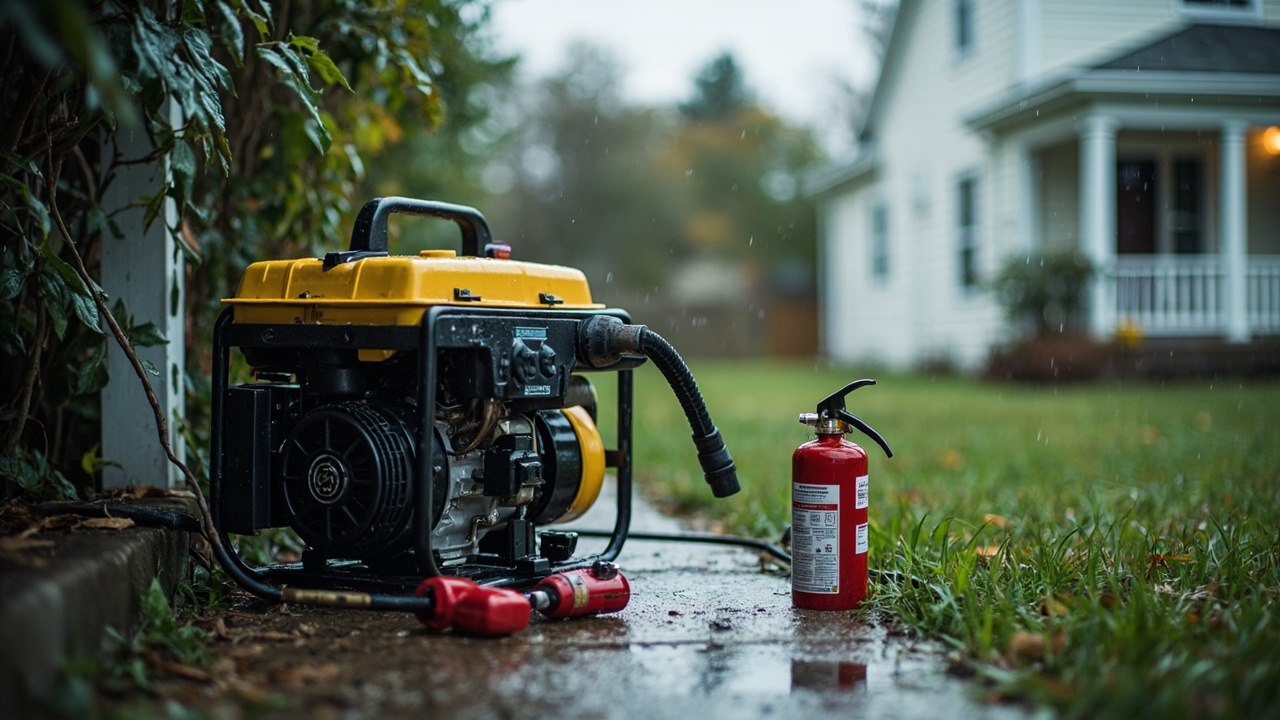
TL;DR: Run portable generators outdoors only, far from doors and vents, with working battery-backed CO alarms and approved electrical connections.
Portable generators keep freezers, well pumps and jobsite tools running when permanent power is unavailable, including after storms, but exhaust can turn deadly in minutes. The newest verified guidance, published Sep. 15, 2026, in Electrical Contractor Magazine by Tom O'Connor in "Clear the Air: Carbon monoxide and generator safety," warns that portable units introduce overlooked hazards beyond the outage itself, and that carbon monoxide, electrical faults and fire must be managed together. A companion safety summary published Sep. 11, 2026, by HomeGridUp as "Generator Safety in a Power Outage: Carbon Monoxide, Placement and Cords" reports that most portable generator incidents reported to the U.S. Consumer Product Safety Commission involve carbon monoxide poisoning from use indoors or in partly enclosed spaces.
Why generator exhaust is so dangerous
Generator exhaust contains carbon monoxide, which Electrical Contractor Magazine describes as an invisible, odorless and potentially deadly gas produced whenever gasoline, diesel, propane or natural gas engines operate. The magazine calls it "the silent killer," according to Electrical Contractor Magazine.
HomeGridUp, summarizing CPSC language, calls carbon monoxide "a poison you cannot see or smell," and states that in a confined space a generator can produce high levels within minutes. Even when exhaust fumes are not smelled, CO may still be breathed, according to HomeGridUp.
When inhaled, CO prevents the blood from carrying enough oxygen through the body, according to Electrical Contractor Magazine. That oxygen disruption is why exposure can escalate from early illness to unconsciousness and death with prolonged exposure, according to Electrical Contractor Magazine.
CO incidents occur because workers often underestimate how quickly dangerous concentrations can accumulate, according to Electrical Contractor Magazine. Electrical and utility workers face added exposure because, unlike homeowners who may use a generator only during occasional outages, crews can operate multiple units continuously for several days during storm restoration, emergency repairs and temporary construction, according to Electrical Contractor Magazine. Those extended run times increase the chance for unsafe placement, improper fueling, equipment failure and worker exposure, according to Electrical Contractor Magazine.
The broader toll is large. HomeGridUp, citing the Centers for Disease Control and Prevention, states that each year more than 400 Americans die from unintentional CO poisoning not linked to fires, and more than 14,000 are hospitalized. People who are asleep, drunk or under the influence of other substances can die from CO poisoning before developing symptoms, which is why a working alarm matters most at night, according to HomeGridUp.
Recognize CO poisoning early
Early symptoms can include headache, dizziness, fatigue, nausea and confusion, according to Electrical Contractor Magazine. Those indicators are often confused with heat stress, dehydration or general fatigue, according to Electrical Contractor Magazine.
HomeGridUp, citing CDC, lists the most common symptoms as headache, dizziness, weakness, upset stomach, vomiting, chest pain and confusion. Infants, older adults and people with chronic heart disease, anemia or breathing problems are more likely to become sick from CO, according to HomeGridUp.
Even exposure to very low levels over weeks or months can produce long-term symptoms, according to Electrical Contractor Magazine. It takes four to six hours to exhale about half of the inhaled CO in the blood, and giving the person 100% oxygen can speed that clearance somewhat, according to Electrical Contractor Magazine.
Symptoms can impair judgment and make self-recognition difficult, so workers should be trained that they may not reliably judge their own condition, according to Electrical Contractor Magazine. Workers should never ignore monitor alarms or assume symptoms are unrelated to CO exposure, according to Electrical Contractor Magazine.
If sickness, dizziness or weakness begins while a generator is running, CPSC guidance summarized by HomeGridUp says to get to fresh air right away and states "DO NOT DELAY." If an alarm sounds or poisoning is suspected, get everyone outside into fresh air immediately and then call 911, according to HomeGridUp. CDC also lists Poison Control at 1-800-222-1222, according to HomeGridUp. People should not re-enter until trained, properly equipped responders say it is safe, according to HomeGridUp summarizing OSHA guidance.
Never run a generator indoors or in enclosed spaces
A common misconception is that opening doors or windows provides adequate ventilation, according to Electrical Contractor Magazine. OSHA specifically warns that generators should never be operated inside buildings, garages or partially enclosed areas because dangerous concentrations can accumulate rapidly, according to Electrical Contractor Magazine.
HomeGridUp gives the same prohibition in household terms, stating that CPSC says never to use a generator inside a home, garage, basement, crawlspace, shed or similar area, even when using fans or opening doors and windows for ventilation. Deadly levels can build quickly in those spaces and can linger for hours even after shutdown, according to HomeGridUp. OSHA likewise says open windows and doors may not prevent buildup in an enclosed space, and NFPA says never to use one in an attached garage even with the door open, according to HomeGridUp.
Place it outdoors, away from openings
Proper placement is the single most effective way to prevent CO poisoning, according to Electrical Contractor Magazine. As a rule, generators should be operated outdoors in open, well-ventilated locations where exhaust cannot migrate into occupied spaces through doors, windows, vents or HVAC intakes, according to Electrical Contractor Magazine.
CPSC guidance summarized by HomeGridUp says to place the generator outdoors, far from doors, windows and vents that could allow CO inside, and to point exhaust away from nearby buildings. CDC recommends using generators outside only, more than 20 feet from windows, doors and vents, while NFPA recommends at least 20 feet from doors, windows and vent openings measured from generator to building, according to HomeGridUp. OSHA recommends 3 to 4 feet of clear space on all sides and above the unit so it receives enough air, according to HomeGridUp.
Distance alone is not the complete rule. OSHA says a generator should not be used outdoors where placement near doors, windows and vents could allow CO to build up inside, according to HomeGridUp. NFPA warns against standing or sitting downwind of exhaust, noting that smelled exhaust means it is being breathed, according to HomeGridUp.
Electrical Contractor Magazine adds that wind direction should be considered, particularly on large commercial projects where exhaust can be carried toward occupied work areas. If possible, units should be positioned well away from buildings while still allowing safe cord routing and equipment protection, according to Electrical Contractor Magazine. Workers should recognize that CO can travel farther than expected, so safe placement requires assessing both the generator location and where exhaust gases may accumulate, according to Electrical Contractor Magazine.
Install battery-backed CO alarms before the outage
When utility power is out, a plug-in alarm without a battery provides no protection. CPSC says to install battery-operated CO alarms, or plug-in alarms with battery backup, following maker instructions, and to test batteries monthly, according to HomeGridUp. CDC says anyone using a generator should have a battery-powered or battery-backup detector in the home, according to HomeGridUp.
CPSC recommends placement on every level of the home and outside sleeping areas, while NFPA says to follow manufacturer instructions for placement and mounting height, according to HomeGridUp. Alarms should be certified to a current safety standard such as UL 2034, according to HomeGridUp.
For employers, portable CO monitors provide continuous air monitoring and audible alarms when concentrations begin to rise, according to Electrical Contractor Magazine. OSHA recommends CO detectors or monitors wherever exposure hazards may exist, especially in enclosed or partially enclosed work environments, according to Electrical Contractor Magazine. If elevated levels are detected, work should stop immediately, affected personnel should move to fresh air, and the exposure source should be identified before operations resume, according to Electrical Contractor Magazine.
Prevent electrocution and backfeed
Generators produce significant electrical energy, and improper grounding, damaged cords, wet conditions or incorrect connection methods can expose workers to serious electrical hazards, according to Electrical Contractor Magazine. OSHA recommends plugging equipment directly into generator-mounted receptacles whenever practical, or using heavy-duty extension cords rated for the intended load and outdoor use, according to Electrical Contractor Magazine. Cords should be inspected before each use and removed from service if damaged, according to Electrical Contractor Magazine.
Never power house wiring by plugging a generator into a wall outlet. CPSC calls that backfeeding extremely dangerous because it can electrocute utility workers and neighbors served by the same transformer and can bypass some home circuit protection, according to HomeGridUp. OSHA says never to attach a generator to building wiring unless a qualified electrician has installed it with a transfer switch, while NFPA says the switch must be properly rated and installed to the National Electrical Code and local codes, according to HomeGridUp.
Electrical Contractor Magazine likewise warns that connecting generators directly into building wiring without an approved transfer switch can energize utility lines, placing workers and emergency responders at risk of electrocution. Proper transfer equipment and lockout/tagout procedures are critical whenever temporary generators connect to existing electrical systems, according to Electrical Contractor Magazine.
Handle fuel, heat and wet weather safely
Portable units combine hot engine components with flammable fuels. Generators should always be shut down and allowed to cool before refueling, according to Electrical Contractor Magazine. Gasoline spilled on hot components can ignite almost instantly, according to Electrical Contractor Magazine.
HomeGridUp reports the same CPSC rule to turn the unit off and let it cool before refueling, and notes OSHA's point that generators remain hot for long periods after stopping. Fuel should be stored only in approved containers and away from ignition sources, according to Electrical Contractor Magazine. CPSC says never to store generator fuel in the home and to keep gasoline, propane and kerosene outside living areas in properly labeled, non-glass safety containers, away from fuel-burning appliances such as a gas water heater in a garage, according to HomeGridUp.
Contractors should avoid overloading generators, which can cause overheating and equipment damage, according to Electrical Contractor Magazine. Routine maintenance, including checking fuel lines, exhaust systems and engine condition, reduces fire and CO hazards, according to Electrical Contractor Magazine.
Wet weather adds shock risk. CPSC warns that generators can shock or electrocute users, especially in wet conditions, according to HomeGridUp. If operation is necessary during wet weather, CPSC says to operate under an open, canopy-like structure on a dry surface where water cannot reach the unit or puddle or drain beneath it, and to dry hands before touching the unit, according to HomeGridUp. The cover must remain open, and moisture protection should not mean moving the unit indoors or near openings to the house, according to HomeGridUp.
Sources referenced
- Clear the Air: Carbon monoxide and generator safety | Tom O'Connor - Electrical Contractor Magazine (https://www.ecmag.com/magazine/articles/article-detail/clear-the-air--carbon-monoxide-and-generator-safety)
- Generator Safety in a Power Outage: Carbon Monoxide, Placement and Cords | HomeGridUp (https://homegridup.com/blog/generator-safety-power-outage-co-prevention/)