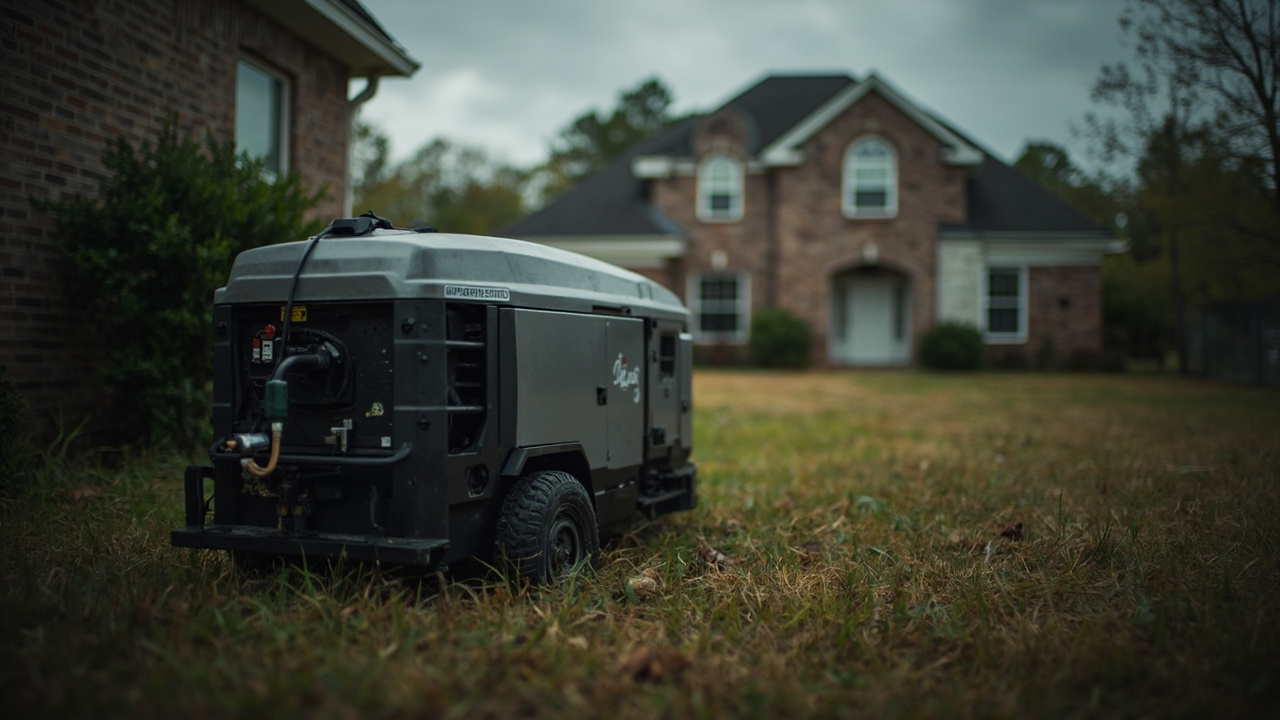
TL;DR: Run propane portables outdoors 20 feet out, exhaust away from openings, and never plug into a wall outlet
Propane-powered generators can provide reliable backup power during an outage, but safe operation is essential, according to the Louisiana Propane Gas Association. Always operate portable generators outdoors, at least 20 feet away from your home and away from doors, windows, and vents. Never run a generator inside a garage, carport, shed, or other enclosed or partially enclosed space, and never plug a generator directly into a household outlet.
Why Aug. 31 guidance focused on propane backup power
The Louisiana Propane Gas Association published its Generator Safety 101 notice on Aug. 31, 2026. The notice states that propane-powered generators can provide reliable backup power during an outage when operated safely.
The association advises households to know the generator's fuel requirements before an outage and to check the propane supply so backup power is prepared. It further advises that generators should be connected using the proper equipment in accordance with the manufacturer's instructions.
The closing message in the Louisiana Propane Gas Association notice links three actions: know your equipment, plan your propane supply, and always put safety first. The association lists contact information as phone (225) 763-8922 and email [email protected].
Peak hurricane season raised the stakes for outage planning
With the peak of Atlantic hurricane season approaching in September, Sunshine Ace Hardware reminded Southwest Florida residents to prepare generators now and use them safely during power outages, according to Hardware Retailing reporting published Aug. 25, 2026.
That report states generators can provide critical backup power during extended outages, but improper use can create risks of carbon monoxide poisoning, electrocution, fire and burns. Michael Wynn, president of Sunshine Ace Hardware, said a generator can keep the refrigerator running, charge phones, and make difficult days more manageable after storm-related power loss.
The same report emphasizes understanding what a generator can handle, keeping it in good working order, and knowing how to use it safely before relying on it. Store associates were described as available to help neighbors before, during and after storms with safe use of dependent equipment.
Place every portable unit outdoors and 20 feet away
Always operate portable generators outdoors, at least 20 feet away from homes, according to the Louisiana Propane Gas Association. Keep the unit away from doors, windows, and vents.
Indiana Electric Cooperatives, in guidance posted Aug. 28, 2026, gives the same placement direction: keep generators outdoors and away from doors, windows, and vents. It adds two positioning details: point the exhaust away from the home and locate the generator downwind from the home.
Hardware Retailing reporting on Sunshine Ace Hardware likewise states portable generators should always be used outdoors, at least 20 feet from homes, with exhaust directed away from doors, windows and vents. Carbon monoxide is described in that report as an odorless, colorless gas produced by fuel-burning equipment.
Never run a generator inside a garage, carport, shed, or other enclosed or partially enclosed space, according to the Louisiana Propane Gas Association. Indiana Electric Cooperatives directs operators to use a generator outdoors in a well-ventilated area.
Never use a garage, shed, carport, or porch as a shelter
Enclosed and partially enclosed locations do not become safe through airflow from an open door. The Louisiana Propane Gas Association specifically prohibits operation inside a garage, carport, shed, or other enclosed or partially enclosed space.
Indiana Electric Cooperatives lists carbon monoxide poisoning as Risk 1 for portable generators. It explains that small generators use a combustion engine that usually burns gasoline or other liquid fuels, and those engines produce carbon monoxide like other gas-powered machines.
Sunshine Ace Hardware guidance summarized by Hardware Retailing warns to protect the unit from moisture without moving it indoors. Indiana Electric Cooperatives directs operators not to use a generator in rainy or wet conditions and not to handle the generator with wet hands.
Stop backfeeding: never plug a generator into a wall outlet
Never plug a generator directly into a household outlet, according to the Louisiana Propane Gas Association. Generators should instead be connected using the proper equipment in accordance with the manufacturer's instructions.
Indiana Electric Cooperatives states never plug a generator directly into home wiring. It explains backfeeding sends power from the generator throughout the house in reverse and can feed onto electric utility power lines. Workers attempting to restore power might unexpectedly encounter this high voltage, which could cause fatal shock.
To prevent backfeed, Indiana Electric Cooperatives says to have a professional install a transfer switch. Hardware Retailing reporting on Sunshine Ace Hardware carries the same warning: never power a home by plugging a generator into a wall outlet, because backfeeding can cause fires and put residents and utility workers at risk of electrocution.
Use transfer equipment, cords, and load order correctly
Indiana Electric Cooperatives instructs operators not to plug a generator into the wall without installing a transfer switch to prevent backfeed. The Louisiana Propane Gas Association similarly requires proper connection equipment used under manufacturer instructions.
Cord selection matters once placement and transfer equipment are settled. Indiana Electric Cooperatives directs users to employ a heavy-duty, outdoor-rated extension cord rated at least equal to the sum of the connected appliances.
Operating sequence also affects electrical safety. Indiana Electric Cooperatives directs users to turn the generator on before plugging in appliances. It also directs users not to overload the generator and not to use a generator as a permanent solution.
For load planning, Hardware Retailing reporting on Sunshine Ace Hardware notes battery-powered portable power stations and solar-powered options also can provide power during an outage. It says households should consider which appliances and devices they need to operate, required wattage and anticipated duration when determining which option meets their needs.
Test oil, fuel, cords, and CO alarms before hurricane season
Follow the manufacturer's instructions and maintenance schedule, according to Sunshine Ace Hardware guidance summarized by Hardware Retailing. Before hurricane season each year, check the oil, make sure stored fuel is fresh, start and test the generator, inspect extension cords and make sure carbon monoxide alarms are working.
Indiana Electric Cooperatives directs households to install carbon monoxide alarms inside the home to provide early warning. It also directs users to consult the owner's manual for specific safety instructions for the generator model in use.
The Louisiana Propane Gas Association frames the same pre-outage window around fuel readiness: know the generator's fuel requirements and check the propane supply before an outage. That preparation step determines whether backup power remains available once utility service fails.
Sunshine Ace retail stores also carry free hurricane guides and checklists with information about preparing for power outages, according to Hardware Retailing. In 2025, Florida law permanently exempted many hurricane supplies from state sales tax, eliminating the need for a Disaster Preparedness Sales Tax Holiday, with qualifying supplies including portable generators, batteries, carbon monoxide detectors, fire extinguishers and other emergency items.
Refuel only after shutdown and cooling
Always turn off the generator and let it cool before refueling, according to Indiana Electric Cooperatives. It warns gasoline spilled on hot engine parts could ignite.
Sunshine Ace Hardware guidance summarized by Hardware Retailing gives the same refueling sequence: turn off fuel-powered models and allow them to cool before adding fuel. Indiana Electric Cooperatives repeats the point in its do-and-don't list: turn off the generator before refueling with gasoline to allow it to cool down.
Fuel storage requires an American National Standards Institute-approved container kept in a cool, well-ventilated place away from fuel-burning appliances, according to Indiana Electric Cooperatives. Sunshine Ace Hardware guidance summarized by Hardware Retailing likewise says store gasoline outside living areas in approved containers.
Place the operating unit on a dry surface, according to Sunshine Ace Hardware guidance summarized by Hardware Retailing. Protection from moisture must not involve moving the generator into an enclosed area, because indoor operation remains prohibited.
Sources referenced
- Generator Safety 101 - Louisiana Propane Gas Association (https://lapropane.org/2026/08/31/generator-safety-101/)
- Use generators safely during winter storms - Indiana Electric Cooperatives (https://www.indianaec.org/2026/08/28/use-generators-safely-during-winter-storms/)