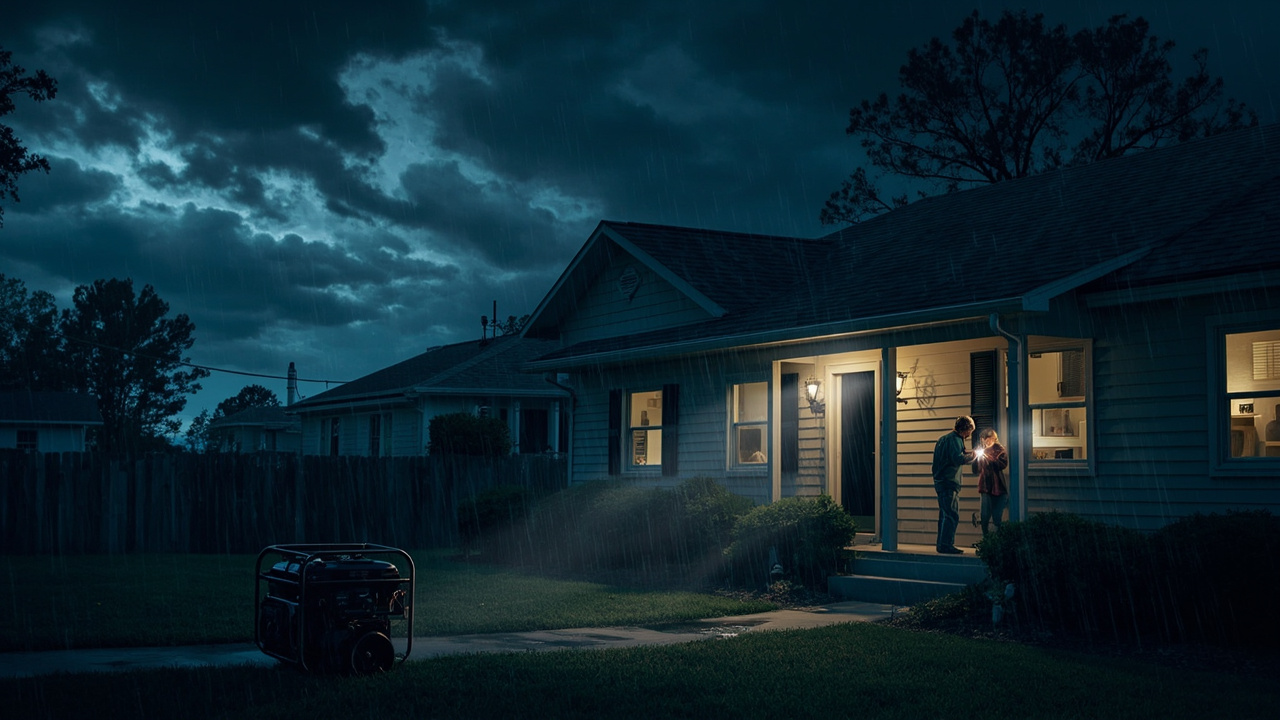
TL;DR: The U.S. Consumer Product Safety Commission urges households in the path of Hurricane Isaias on Oct. 9, 2026 to run portable generators outdoors only, at least 20 feet from homes, with working CO alarms on every level.
Hurricane Isaias Warning: CO Poisoning Is the Preventable Killer After the Storm
The U.S. Consumer Product Safety Commission on Oct. 9, 2026 urged those in the path of Hurricane Isaias to take steps to protect themselves and their families against carbon monoxide poisoning, fires and other post-storm hazards, according to the U.S. Consumer Product Safety Commission release titled “Hurricane Isaias Warning: Protect Your Family from CO Poisoning and Other Post-Storm Dangers.”
The agency identified Hurricane Isaias as the first hurricane of the 2026 Atlantic hurricane season, strengthening in the Gulf of America and expected to make landfall late Friday or early Saturday, according to that same U.S. Consumer Product Safety Commission release.
The agency warned that loss of power after storms leads to preventable deaths from improper generator use and other household hazards, according to that same U.S. Consumer Product Safety Commission release.
Where Isaias stood on Oct. 9, 2026
Hurricane Isaias formed in the Gulf and became the first Atlantic hurricane of the season, forecast to make landfall along the northern Gulf Coast later this week, according to Fox Weather reporting titled “Isaias is back in the spotlight with a destructive history of tropical tornadoes.”
The storm marked the first hurricane in the Atlantic basin in over 340 days, according to that same Fox Weather report.
Hurricane hunters deployed Wednesday to provide data for models on the storm’s potential and how favorable the environment is, according to that same Fox Weather report.
A hurricane warning was in effect for the northern Gulf Coast, from the Mississippi-Alabama state line, across southern Alabama, to Panama City, Florida, according to CBS Philadelphia reporting titled “As Hurricane Isaias approaches U.S., looking back at tropical storm that hit Philadelphia region in 2020.”
Areas such as Charleston, South Carolina, New Orleans, Mobile, Alabama and Savannah, Georgia, were expected to experience very heavy precipitation totals, according to that same Fox Weather report.
A Level 2 out of 4 flash flood threat was active across six states stretching from Louisiana to South Carolina and into Northern Florida, according to that same Fox Weather report.
The Florida Department of Health in Escambia County on Oct. 9, 2026 urged residents to prepare now ahead of Hurricane Isaias’ landfall, according to the Florida Department of Health in Escambia County report titled “DOH-Escambia Urges Residents to Prepare Ahead of Hurricane Isaias.”
Why portable generators cause post-storm CO deaths
Portable generators are one of the leading causes of post-storm carbon monoxide deaths, according to the U.S. Consumer Product Safety Commission release.
Carbon monoxide is a colorless, odorless gas that can kill within minutes, often before victims recognize symptoms, according to that same U.S. Consumer Product Safety Commission release.
The agency’s Bluesky account stated that portable generators can produce enough carbon monoxide to kill in minutes, and that people have survived major storms but been killed by carbon monoxide from portable generators, according to related U.S. Consumer Product Safety Commission public messaging.
The Florida Department of Health in Escambia County advised residents to follow the manufacturer’s instructions for safe operation and to install a battery-operated carbon monoxide detector in the home, according to that Florida Department of Health in Escambia County report.
That county health agency also advised keeping children and pets away from the generator, noting that generators can become hot quickly, according to that same Florida Department of Health in Escambia County report.
Place the generator outdoors, 20 feet out
Never use a portable generator inside homes, garages, basements, crawlspaces, sheds or other enclosed areas, even if doors or windows are open, according to the U.S. Consumer Product Safety Commission release.
The agency stated that generators produce lethal levels of carbon monoxide, according to that same U.S. Consumer Product Safety Commission release.
Operate generators outdoors only, at least 20 feet from homes and buildings, with exhaust directed away from windows, doors and vents, according to that same U.S. Consumer Product Safety Commission release.
Pick the outdoor spot ahead of time, at least 20 feet from doors, windows and vents, so placement is not decided in the rain, according to Southern Air guidance and consistent with the federal 20-foot separation described by the U.S. Consumer Product Safety Commission release.
Do not operate the generator in the house or garage, according to the Florida Department of Health in Escambia County report.
Never run a generator indoors, including in a garage, according to the U.S. Consumer Product Safety Commission public messaging.
Follow manufacturer instructions to reduce shock hazards during wet weather, according to the U.S. Consumer Product Safety Commission release.
Regularly check and maintain generators to ensure they work properly, according to that same U.S. Consumer Product Safety Commission release.
Read and follow all labels, instructions and warnings on the generator and in the owner’s manual, according to that same U.S. Consumer Product Safety Commission release.
Buy the shutoff feature if you are replacing a unit
Look for portable generators that have a carbon monoxide shut-off safety feature, according to the U.S. Consumer Product Safety Commission release.
These features automatically shut off generators when dangerous carbon monoxide levels build nearby, according to that same U.S. Consumer Product Safety Commission release.
Models certified to the latest PGMA G300-2023 and UL 2201-2023 standards include carbon monoxide safety technologies designed to significantly reduce CO poisoning risk, according to that same U.S. Consumer Product Safety Commission release.
UL 2201 certified models have reduced CO emissions in addition to the CO shut-off feature, according to that same U.S. Consumer Product Safety Commission release.
CO and smoke alarms on every level
Working carbon monoxide and smoke alarms save lives, according to the U.S. Consumer Product Safety Commission release.
Install working CO and smoke alarms, battery-operated or with battery backup, on every level and outside sleeping areas at home, according to that same U.S. Consumer Product Safety Commission release.
Interconnected alarms are best; when one sounds, they all sound, according to that same U.S. Consumer Product Safety Commission release.
Make sure smoke alarms are installed inside each bedroom, according to that same U.S. Consumer Product Safety Commission release.
Test alarms monthly to make sure they are working properly, and replace batteries, if needed, according to that same U.S. Consumer Product Safety Commission release.
Never ignore an alarm when it sounds, according to that same U.S. Consumer Product Safety Commission release.
Get outside immediately if an alarm sounds, then call 911, according to that same U.S. Consumer Product Safety Commission release.
Make sure household CO detectors have working batteries before operating a generator during an outage, according to generator-safety guidance summarized in the pre-storm period.
Charcoal and candles after the power fails
Never use charcoal indoors, according to the U.S. Consumer Product Safety Commission release.
Burning charcoal in an enclosed space can produce lethal levels of carbon monoxide, according to that same U.S. Consumer Product Safety Commission release.
Do not cook on a charcoal grill in a garage, even with the garage door open, according to that same U.S. Consumer Product Safety Commission release.
Use caution when burning candles, according to that same U.S. Consumer Product Safety Commission release.
Use flashlights or battery-operated candles instead of open flame where possible, according to that same U.S. Consumer Product Safety Commission release.
If using candles, do not burn them on or near anything that can catch fire, according to that same U.S. Consumer Product Safety Commission release.
Never leave burning candles unattended, according to that same U.S. Consumer Product Safety Commission release.
Extinguish candles when leaving the room and before sleeping, according to that same U.S. Consumer Product Safety Commission release.
Flooded appliances and gas leaks
Look for signs that appliances have gotten wet, according to the U.S. Consumer Product Safety Commission release.
Do not touch wet appliances that are still plugged into an electrical source, according to that same U.S. Consumer Product Safety Commission release.
Before using appliances, have a qualified professional or utility representative inspect the home and replace all gas control valves, electrical wiring, circuit breakers and fuses that have been under water, according to that same U.S. Consumer Product Safety Commission release.
If you smell or hear gas leaking, leave your home immediately and contact local gas authorities from outside the home, according to that same U.S. Consumer Product Safety Commission release.
Do not operate any electronics, such as lights or phones, before leaving a home with a suspected gas leak, according to that same U.S. Consumer Product Safety Commission release.
Be “week ready” for at least seven days
A good rule of thumb is to be “week ready,” meaning enough emergency supplies on hand to be self-sufficient for at least one week, according to the Florida Department of Health in Escambia County report.
Whether staying or evacuating, ensure the household disaster kit includes non-perishable food, a can opener, and water at one gallon per person, per day, including food and water for pets, according to that same Florida Department of Health in Escambia County report.
That kit list also includes a first aid kit, weather radio, flashlight, batteries and cash, according to that same Florida Department of Health in Escambia County report.
The list also includes paper cups, plates, plastic utensils, blankets and pillows or sleeping bags, a change of clothes appropriate to the climate, sturdy shoes and a rain poncho, according to that same Florida Department of Health in Escambia County report.
The list also includes personal hygiene items, books and games, a cell phone and portable charger, enough essential medications to last seven days, important papers in a watertight container, insect repellent, sunscreen, and bleach or some other disinfectant, according to that same Florida Department of Health in Escambia County report.
If the household includes an infant or older adult, include special items they will need, such as baby formula, baby wipes or adult incontinence supplies, according to that same Florida Department of Health in Escambia County report.
Fill the vehicle’s gas tank, according to that same Florida Department of Health in Escambia County report.
If the household has a generator, fill gas cans and store them safely, according to that same Florida Department of Health in Escambia County report.
When deciding to evacuate, consider whether the home is in an evacuation zone, whether the home is safe, and where household members will go if they evacuate, according to that same Florida Department of Health in Escambia County report.
Residents can enter an address into the Escambia County Emergency Management’s Know Your Evacuation Zone tool to determine evacuation-zone status and whether evacuations have been ordered, according to that same Florida Department of Health in Escambia County report.
If residents live in a mobile home or a home needing extensive repairs, moving to a more structurally sound building may be appropriate even outside an evacuation zone, according to that same Florida Department of Health in Escambia County report.
A shelter should be a last resort, and shelters are frequently uncomfortable, noisy and offer little privacy, according to that same Florida Department of Health in Escambia County report.
Household members with special medical needs may be eligible for the Special Needs Shelter Program, according to that same Florida Department of Health in Escambia County report.
What the 2020 Isaias outbreak says about staying alert
Hurricane Isaias produced 39 twisters back in 2020, the largest number of tornadoes produced by a U.S. landfalling tropical cyclone since Hurricane Florence in 2018, according to Fox Weather.
During that event, 17 of the 39 tornadoes occurred before the hurricane made landfall over about eight hours in 2020, according to the National Hurricane Center as cited by Fox Weather.
Of those tornadoes, one was rated an EF-3, seven were EF-2, 17 were EF-1 and 14 were EF-0, according to authorities cited by Fox Weather.
The National Weather Service said two people were killed by an EF-3 tornado in Bertie County, North Carolina, as Isaias impacted the region on Aug. 4, 2020, according to Fox Weather.
The National Hurricane Center said that a cold front and associated upper-level trough helped to enhance vertical wind shear profiles as Isaias approached, resulting in a favorable environment for tornado development, according to Fox Weather.
Tropical Storm Isaias swept through the Philadelphia region on Aug. 4, 2020, producing widespread rainfall totals of 4 to 7 inches in wetter areas, with some locations receiving even more, according to CBS Philadelphia.
Both Perkiomen Creek at Graterford and Little Lehigh Creek at Allentown reached record flood levels, according to that same CBS Philadelphia report.
Damaging winds brought down trees and power lines, and eight tornadoes were confirmed across the broader regional forecast area, including an EF2 that tracked approximately 20 miles from Northeast Philadelphia into Bucks County, producing winds estimated as high as 115 mph, according to that same CBS Philadelphia report.
Importantly, Isaias had already weakened to a tropical storm when it reached that region in 2020, and its interaction with a powerful upper-level system helped produce widespread impacts, according to that same CBS Philadelphia report.