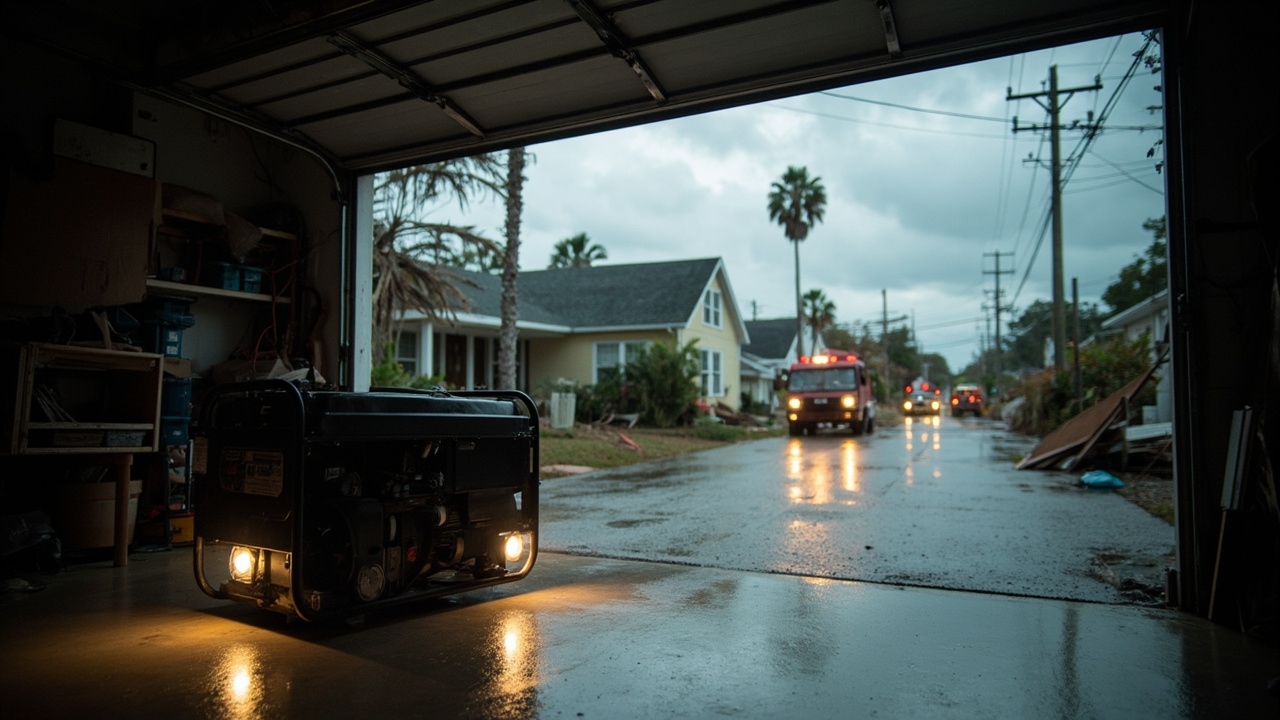
TL;DR: A man died Oct. 10 in Escambia County from carbon monoxide poisoning after a family generator ran in a non-ventilated area, marking the county's second Hurricane Isaias death.
Second death confirmed Oct. 10
The Escambia County Sheriff's Office confirmed a second Hurricane Isaias death on Oct. 10 after a family operated a generator indoors, according to the Pensacola News Journal report titled "Second Isaias death confirmed in Escambia County from carbon monoxide."
Sheriff Chip Simmons said the victim was a man who died Oct. 10 from carbon monoxide poisoning after fumes from the family's generator built up in a non-ventilated area.
Simmons warned residents against indoor operation, stating that generators must be used in a well-ventilated area and not inside a garage.
Four other individuals in the same family were hospitalized with carbon monoxide poisoning, Simmons said.
The confirmation came on Saturday as the Florida Panhandle began recovering from the hurricane, according to the News4Jax report titled "Gov. DeSantis confirms 2 storm-related deaths in Panhandle as flash flooding threat persists from Isaias."
Gov. Ron DeSantis said Saturday that two people had died in storm-related incidents in the region.
How the two Escambia deaths happened
The first Escambia County death involved a falling tree just after the hurricane made landfall Oct. 9, according to the Pensacola News Journal.
The victim was a woman who was inside her home when the tree fell, crashed through the house and pinned her to the ground.
Sheriff Chip Simmons said on Facebook that one woman died after a tree fell on her home, according to News4Jax.
WEAR Staff reported in the WEAR report titled "Officials confirm two fatalities in Escambia County: 1 from falling tree, 1 from generator" that the tree fell on a home in the Burgess Road area.
The second death was found Saturday morning in a garage that was closed with a running generator inside it, according to WEAR.
WEAR reported that four members of his family — ages 72, 24, 5 and 4 — were transported to the hospital for non-life-threatening treatment.
DeSantis separately described the generator death as occurring in a garage where a generator was running, and warned residents about generator safety.
The governor said residents should not run generators inside a home or inside a garage, adding that the unit has to go outside the structure because indoor operation can be very hazardous.
State briefing outlines power losses
At about 2:30 p.m. Saturday, more than 430,000 customers remained without power, DeSantis said, according to News4Jax.
Nearly 10,000 accounts had been restored by that time, and crews were working to clear trees and other debris blocking utility repairs.
About 325,000 outages were in Florida Power & Light's service area, with the remainder served by electric cooperatives, DeSantis said.
The state Division of Emergency Management had completed 180 missions and continued responding to requests, according to the briefing.
Florida Highway Patrol had carried out 67 debris-clearing missions, officials said.
Eighty-five traffic signals had been restored using generator power, DeSantis said.
Isaias landfall and downgrade
Isaias made landfall near Destin at about 9:30 p.m. Friday as a Category 2 hurricane, bringing damaging winds, storm surge and heavy rain to the Florida Panhandle, according to News4Jax.
The storm weakened overnight and was downgraded to a post-tropical cyclone, officials said.
A separate account in the NOLA.com report titled "Two deaths confirmed in AL, FL from Hurricane Isaias" placed landfall at around 8:30 p.m. Friday near Destin as a Category 2 storm with maximum wind speeds of 105 mph.
That report said the storm moved north across Alabama through the night and could still dump rain across the southeastern United States through Saturday before dissipating Sunday, according to the National Hurricane Center.
The Atlantic hurricane season had been unusually quiet, and Isaias was the first hurricane to hit the eastern U.S. since 2024, according to forecast coverage cited by News4Jax.
Flooding threat persisted after winds
DeSantis said Saturday morning that the risk of flooding was still high, warning that flooding can occur a day or two days after the storm passes.
He said rivers in the region could crest over the next several days.
Jared Perdue, executive director of the Florida Division of Emergency Management, said the Shoal River in Okaloosa County was still rising and was not expected to crest for a couple of days.
State search-and-rescue teams, watercraft and other resources would remain ready, officials said.
Perdue urged residents not to drive through standing or flowing water, warning that it can sweep away a vehicle or person.
Officials also advised residents to stay away from downed power lines and follow local authorities' instructions.
Forecasters warned that Isaias could bring 4 to 8 inches of rain across southern Alabama, the Florida Panhandle and Big Bend over the weekend, with the storm expected to move into the Tennessee Valley and then the mid-Atlantic on Sunday.
Robbie Berg, a warning coordination meteorologist with the National Hurricane Center in Miami, said high wind warnings remained for portions of the Southeast.
Berg said the system remained both a wind threat and a heavy rainfall threat even after becoming post-tropical, with potential for significant flash flooding over the next couple of days.
Airports and local damage reports
The Northwest Florida Beaches International Airport had reopened to commercial service, DeSantis said.
Destin-Fort Walton Beach Airport and Pensacola International Airport remained closed to commercial service at the time of the briefing, according to News4Jax.
Officials across the Florida Panhandle continued surveying damage Saturday.
Hurricane-force winds blew the roof off a hotel in Pensacola, and the city's mayor said the airport took some damage while power was out downtown.
The storm flattened a boathouse in Destin and flooded streets, officials and local reports said.
Residents were out early picking through debris, including a worker in a condominium parking lot in Panama City who swept up piles of insulation and pieces of metal from the building.
Nearby, people were putting back beach chairs that had been tossed about by the storm.
Tim Mowry, who lives in Pensacola, said he spent hundreds of dollars buying gas and filling his propane tanks before the storm, which was his first hurricane.
Broader toll reported in Alabama
Alabama Gov. Kay Ivey said two residents of the state died during the storm and its aftermath, according to NOLA.com.
Ivey did not provide details about the fatalities in that announcement.
The Jefferson County Emergency Management Agency told news outlets one person was killed by a falling tree, NOLA.com reported.
Escambia County Sheriff Chip Simmons said his office confirmed another death later on Saturday when deputies found a man killed by fumes from an improperly vented generator, according to NOLA.com.
What preparedness officials instructed
Do not operate a generator inside a home, inside a garage, or in a non-ventilated area, Simmons and DeSantis warned.
Generators must be used in a well-ventilated area and outside the structure, according to their instructions.
Do not drive through standing or flowing water, Perdue urged.
Stay away from downed power lines and follow local authorities' instructions, officials advised.
Keep state search-and-rescue teams, watercraft and other resources in mind as available response assets while rivers remain high and roads remain blocked by trees and debris.