TL;DR: Portage, Indiana is considering an ordinance requiring portable generators to be operated at least 20 feet from a home, after summer storms caused long outages and a fatal carbon-monoxide incident.
The Portage City Council is being asked to adopt an ordinance requiring portable generators to be at least 20 feet away from a home while in use, according to the Chicago Tribune article titled "Portage considering a law to ensure safe generator use." The request followed a brutal series of storms this summer that resulted in lengthy power outages. The report was published September 4, 2026 at 10:15 AM CDT by Doug Ross for the Post-Tribune. The proposal would move generator separation from advice to an enforceable city rule.
What the 20-foot proposal would do
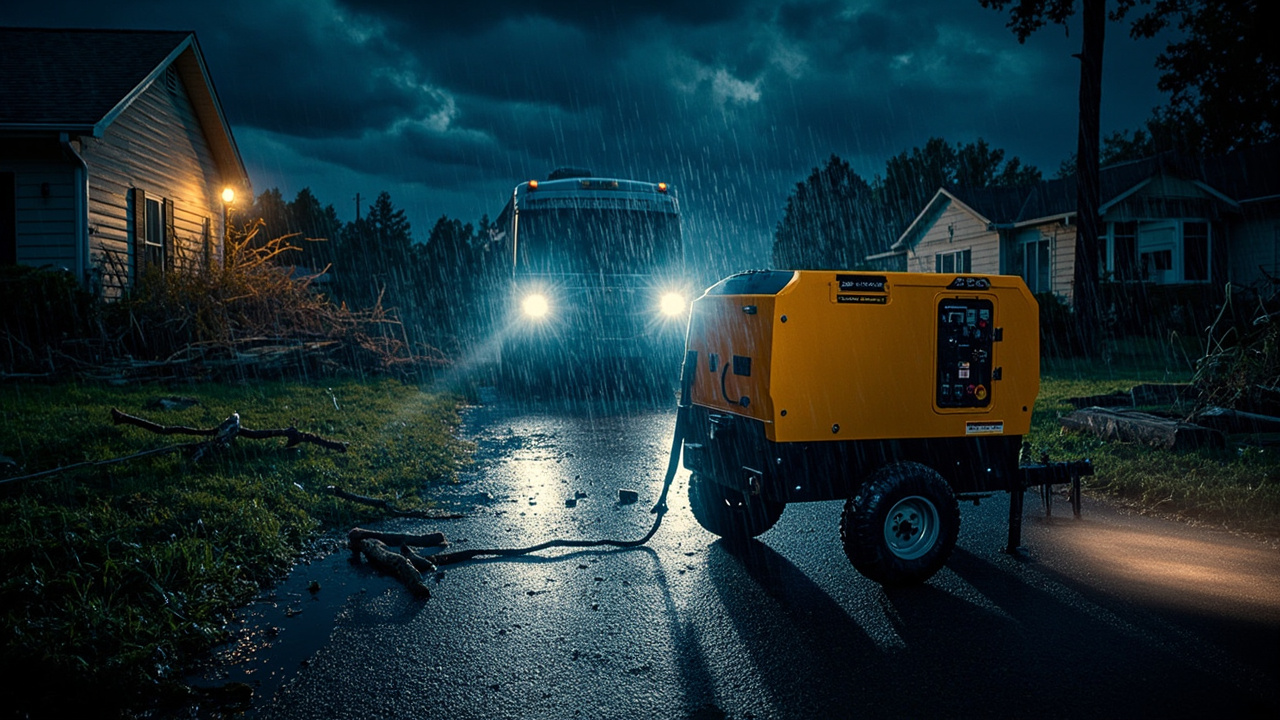
The proposal before the council centers on a single distance standard for portable generators in use. Units would need to be positioned at least 20 feet away from a home while operating.
Resident Chantal Sedlacek brought the request to city leaders. She appreciated the Portage Fire Department posting a warning to keep generators away from windows and doors. She said she wants enforcement powers, not just advice.
"Soft education fails when lives are on the line," Sedlacek said, as quoted in the Chicago Tribune article titled "Portage considering a law to ensure safe generator use."
"It only takes 20 feet to save a life," Sedlacek said, as quoted in the same report.
Mayor Austin Bonta promised to refer her concern to City Attorney Dan Bortnicki to study the feasibility and enforceability. Bonta said without enforceability, the ordinance would not work. "This is a very serious issue," he said, as quoted in the same report.
The council's Ordinance Committee, which hammers out kinks in proposed ordinances, meets at 5:30 p.m. on the first Tuesday of the month before the City Council meeting, according to that report. That committee process is where proposed language is normally refined before full council action.
The June deaths that prompted the request
In the wake of the June 11 storm, Salvatore and Deborah Fogu, of Palos Hills, Illinois, died of carbon monoxide poisoning at Lakeshore Camp Resort in Portage while their generator was running outside their camper's window, according to the Chicago Tribune article titled "Portage considering a law to ensure safe generator use."
A photo caption with that report identifies the couple as Sal and Debbie Fogu relaxing in camp chairs. It states they died Saturday, June 13, 2026, of carbon monoxide poisoning after fumes from their portable generator entered their RV in Portage. The image was credited to Vickie Perez.
The location details matter for preparedness planning. The deaths did not involve a house with a distant yard. They involved a camper with a generator operating outside the camper's window. The fumes entered the RV. That sequence is why Sedlacek and fire officials focused on separation from windows and doors, not only separation from a house wall.
Why Portage faced repeated generator use this summer
Portage endured more than one outage-producing weather event this summer. The June 11 storm was followed by an Aug. 11 derecho that clobbered Portage, Gary and other areas of Northwest Indiana, according to the Chicago Tribune article titled "Portage considering a law to ensure safe generator use."
A few residents were still without power Tuesday in the wake of the Aug. 11 derecho. That Tuesday reference appeared in the September 4 report on the generator proposal. Extended outages increase reliance on portable power. Extended reliance increases the number of generator setups, refuelings, nighttime runs, and placements near occupied structures.
"Severe weather is no longer just a coastal problem," Sedlacek said, as quoted in the same report.
For households, the practical lesson is that generator safety cannot be treated as a one-storm task. The Portage sequence included a June storm with a fatal camper incident and an August derecho with multi-day outages affecting Portage and Gary. Each outage required residents to select a location, route power, manage fuel, and keep exhaust away from occupied space.
How the 20-foot rule matches established safety guidance
The 20-foot distance in the Portage request matches guidance cited by outage-safety sources. Federal emergency officials recommend taking several steps before electricity goes out, including knowing how to safely operate a generator, according to the Beaumont Enterprise article on power-outage preparation.
That Beaumont Enterprise guidance states that if using a generator, residents should make sure it can be operated outdoors at least 20 feet away from windows, doors and vents. The same checklist recommends fully charging cellphones, laptops and portable power banks. It recommends gathering flashlights, headlamps and extra batteries. It recommends making sure smoke and carbon monoxide alarms have working batteries or battery backups. It recommends keeping a battery-powered or hand-crank NOAA Weather Radio available.
The Louisiana Propane Gas Association article titled "Generator Safety 101" gives the same separation standard. It states propane-powered generators can provide reliable backup power during an outage, but safe operation is essential. It states to always operate portable generators outdoors, at least 20 feet away from a home and away from doors, windows, and vents. It states never to run a generator inside a garage, carport, shed, or other enclosed or partially enclosed space.
The same Association guidance addresses fuel and connection planning before an outage. It states to know the generator's fuel requirements and check propane supply to be prepared for backup power. It states generators should be connected using the proper equipment in accordance with the manufacturer's instructions. It states never to plug a generator directly into a household outlet. It adds that planning can make a big difference when power goes out.
The Beaumont Enterprise checklist also addresses food, lighting, fuel and communications. It recommends checking medications or medical equipment that require electricity or refrigeration and having a backup plan. It recommends keeping refrigerators at 40 degrees or below and freezers at 0 degrees or below. It recommends placing appliance thermometers in refrigerators and freezers. It recommends freezing containers of water or gel packs to help keep food cold if power goes out. It recommends having coolers available in case an outage lasts more than four hours. It recommends filling up a vehicle and having a car charger for a phone. It recommends having enough nonperishable food and water available. It recommends using flashlights whenever possible because candles can create a fire risk, and it states never to leave a burning candle unattended.
What enforcement could change for residents
The distinction Sedlacek drew was between posted warnings and enforceable rules. The Portage Fire Department had posted a warning to keep generators away from windows and doors. Sedlacek appreciated that warning. She argued it was not enough without enforcement authority.
That distinction affects renters, campgrounds, close lots, and neighborhoods where one household's exhaust can reach another household's windows. A 20-foot ordinance, if drafted and adopted, would give officers and code staff a measurable standard. It would define compliance as distance plus operation status. It would allow intervention before poisoning occurs, rather than education after a call.
Bonta's response kept the proposal in study status as of the September 4 report. He did not announce adoption. He promised referral to City Attorney Dan Bortnicki to study feasibility and enforceability. That means residents in Portage should continue to treat the 20-foot separation as a safety practice and a pending legal question, not as an adopted city code on that date.
What else the council acted on that Tuesday
At its Tuesday meeting, the council passed a series of ordinances and resolutions, according to the Chicago Tribune article titled "Portage considering a law to ensure safe generator use."
The council gave its blessing to a $15 million bond issue by the Redevelopment Commission for a series of major projects. "There's no issue of us being able to pay off this bond," Bonta said, as quoted in that report. The sale of land owned by the RDC could mean paying off the bond early, although Bonta is concerned about preserving cash flow so the RDC can help out the civil city in the next few years if necessary.
Among the projects the bond would cover are extending Veterans Parkway to make the retail area south of U.S. 6 more accessible, improving the Samuelson Road intersection with Central Avenue, a bridge over Burns Waterway and a new road for the Portage Mall area, according to that report.
The mall road and bridge are especially important to the city's plans. The bridge would extend Burns Parkway over Burns Waterway. "It opens up nearly 300 acres of land for development," Bonta said, as quoted in the report, potentially tripling the value of that land by adding connectivity that makes it more ripe for development. "There are interested parties right now," Bonta said.
The Portage Mall road would be "the first street of our new downtown," creating a streetscape that would turn the existing parking lot into something more attractive, more useful and more likely to bring future development across from the existing buildings. "It is a transformative infrastructure project," Bonta said, as quoted in the report.
The council also approved an ordinance regarding dead, diseased or dangerous trees. The ordinance defines those three categories of trees and tells whose responsibility it is to deal with them. "I sure wish we had gotten this one two or three years ago," Bortnicki said, as quoted in the report.
Under the new ordinance, code enforcement would send a notice to the property owner of trees that need to be dealt with. "This is an example of something where the city can waive compliance because of the emergency declaration," Councilman Collin Czilli said, as quoted in the report. It also does not apply to fallen trees, Bortnicki said. Once a tree falls, it is considered debris, not a tree for purposes of the ordinance.
Another ordinance approved Tuesday deals with neglected premises. "This is a language change that makes an existing ordinance enforceable," Bonta said, as quoted in the report.
Practical setup for households and campers
For preparedness readers, the Portage record supports three immediate actions. First, identify an outdoor generator spot that is at least 20 feet from the home and away from doors, windows and vents, consistent with the Louisiana Propane Gas Association article titled "Generator Safety 101" and the Beaumont Enterprise outage guidance. Second, confirm fuel requirements, fuel supply, proper connection equipment and manufacturer instructions before storm season, consistent with the Association guidance not to plug a generator directly into a household outlet. Third, confirm working smoke and carbon monoxide alarms with battery backup, charged communications gear, lighting without open flame where possible, food-temperature tools, coolers, vehicle fuel and medical backup plans, consistent with the Beaumont Enterprise checklist.
Campers should apply the same window logic used in fixed homes. The Fogu deaths involved a generator running outside a camper window, with fumes entering the RV, according to the Chicago Tribune article titled "Portage considering a law to ensure safe generator use." A campsite setup should keep the unit outdoors, distant from the camper, with exhaust directed away from windows, doors and vents.
Sources referenced
- Generator Safety 101 - Louisiana Propane Gas Association (https://lapropane.org/2026/08/31/generator-safety-101/)