TL;DR: Prepare for power outages before they happen — businesses should assemble accessible power-readiness information and maintain backup systems, while families should store food, water and supplies to last until power returns or help arrives.
Outages Hit Homes and Businesses Differently — Preparation Has to Come First
Power outages rarely arrive at convenient times, according to GenServe | Power Outage Preparedness: What Businesses and Families Can Do Before an Emergency, published on Sept. 22, 2026. That GenServe report notes outages can accompany hurricanes, severe thunderstorms, flooding, winter weather and other emergencies. The same report notes the effects can be very different for a commercial facility and a household.
The principle that connects both settings is timing. According to GenServe, preparation needs to happen before the power goes out. Households are advised to have necessary food and supplies available until power returns or assistance arrives. Businesses are advised to have their own version of a preparedness toolkit ready for the team that will respond.
That timing point was reinforced during National Preparedness Month in September. On Sept. 21, 2026, Here’s how to create an emergency supply kit – USPS Employee News encouraged employees to prepare or refresh a home disaster kit. That USPS guidance describes a household disaster supplies kit as a collection of basic items a family may need in an emergency, with an emphasis on having your own food, water and other supplies to last for several days.
Why Severe Weather Makes Advance Planning Non-Negotiable
GenServe lists hurricanes, severe thunderstorms, flooding and winter weather among the events that can bring outages. Other emergencies can also interrupt power. Because the cause can vary, the consequences can vary as well.
For a family, the immediate problem can be staying fed, hydrated, informed and safe until power returns or help arrives. For a business, the immediate problem can be protecting critical systems, directing staff, and using backup power correctly. GenServe states that businesses need their own version of a preparedness toolkit, focused on information, maintenance and resources the team will need when something goes wrong.
The National Weather Service identifies building and maintaining an emergency supply kit as one of its key preparedness steps, according to GenServe. The parallel message from the Postal Service in September was direct: use National Preparedness Month to check what is on hand, replace what is outdated, and make sure everyone in the household can find and reach the kit if a disaster occurs.
For Businesses: What Goes in a Power-Readiness Toolkit
GenServe describes an organization’s kit as something different from a closet full of supplies. It is the information, maintenance history and resources a team will need when something goes wrong. The report lists eight categories to consider including.
1. Current Preventative Maintenance Records
GenServe lists current preventative maintenance records first among business toolkit items. Keeping those records current gives responders a reference for what service has been completed on critical-power equipment. Accessibility matters as much as completeness, because GenServe adds that teams must know where this information is kept.
2. Generator Information
Generator information is the second item on the GenServe business list. That can cover the unit or units a site depends on for backup power. When severe weather knocked out power in Arizona, a GenServe technician worked through the night to restore three emergency generators and keep essential services running, according to a GenServe update dated Sept. 22, 2026. The example underscores why having generator details available to the response team is part of readiness.
3. Critical Equipment Documentation
GenServe also lists critical equipment documentation. That documentation supports decisions about what must stay running and how supported equipment should be handled. In a separate GenServe message about outages, the company states that preparedness means knowing which systems matter most and making sure teams understand what to do when backup power is needed.
4. Emergency Contacts
Emergency contacts are the fourth item in the GenServe toolkit outline. Having those numbers gathered before an event avoids searching for them during an outage. A related GenServe message states that the middle of an outage is not the time to determine roles, find equipment information, or figure out who to call.
5. Site Information
Site information is the fifth item listed by GenServe. It gives responding staff and outside help shared reference details about the facility they are trying to stabilize. Like the other toolkit items, its value depends on team members knowing its location in advance.
6. Internal Escalation Procedures
Internal escalation procedures are the sixth item in the GenServe business checklist. Those procedures define how an issue is raised inside the organization. GenServe’s broader guidance on critical power calls for making critical power part of the emergency response plan, rather than treating it as an afterthought.
7. Critical-System Priorities
Critical-system priorities are the seventh item listed by GenServe. Priorities identify which systems receive attention first when power is limited. That aligns with the company’s statement that businesses should know which systems matter most when an outage disrupts more than lights.
8. Backup-Power Procedures
Backup-power procedures are the eighth item in the GenServe business outline. Those procedures describe how backup power is to be used at that site. GenServe notes that teams should understand what to do when backup power is needed, and that preparation is what makes the response easier when the unexpected arrives.
Across all eight, GenServe emphasizes one action: make sure your team knows where this information is. A toolkit that staff cannot locate quickly does not function as a toolkit during an event.
For Families: What Goes in an Emergency Supply Kit
For households, GenServe states that families should maintain supplies that can support members until power returns or help arrives. The report advises following current government recommendations when deciding what belongs in the family’s emergency kit, and points to Ready.gov preparedness resources for additional guidance on creating and maintaining an emergency plan and supplies.
The Sept. 21 USPS guidance provides a concrete illustration of that government-aligned approach. It states that being prepared means having your own food, water and other supplies to last for several days. It then lists recommended contents.
Water is listed as one gallon of water per person per day for several days. Food is listed as nonperishable, easy-to-prepare food, plus a manual can opener. Lighting and information are addressed with a battery-powered or hand-crank radio, a flashlight and extra batteries.
Health and hygiene items on the USPS list include soap, hand sanitizer and disinfecting wipes. First-aid supplies are listed separately. Medications and any needed medical items are also listed. Sanitation and cleanup are addressed with moist towelettes, garbage bags and plastic ties. Communications power is addressed with a cellphone with charger and a backup battery.
The USPS article adds that households should consider adding copies of personal documents. Examples given are medication lists and pertinent medical information, proof of address, deed or home lease, passports, birth certificates and insurance policies. It recommends storing those items in airtight plastic bags.
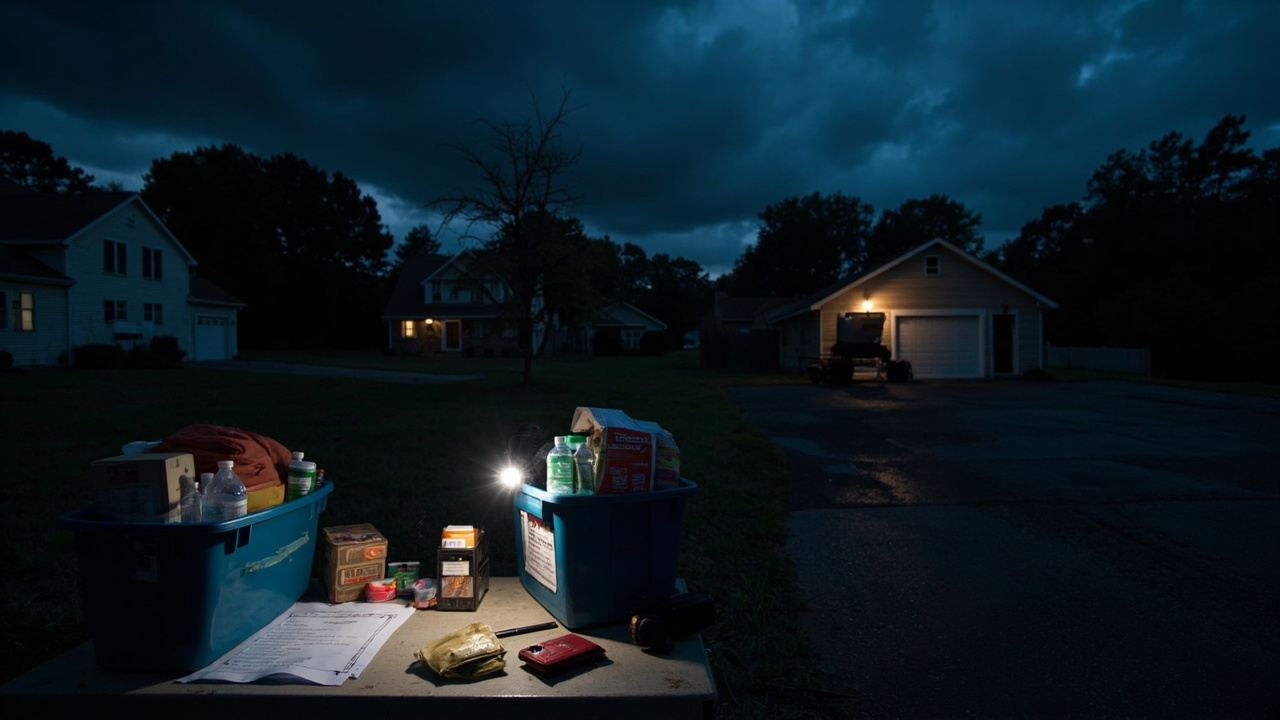
Storage and access are treated as part of the kit itself. The USPS guidance recommends putting the entire disaster supplies kit in one or two easy-to-carry containers such as plastic bins or a duffel bag. It states that everyone in the household should know the location of the kit and be able to access it in the event of a disaster.
Portable Generator Safety Must Be Decided Before the Outage
A generator can provide backup power during an outage, but GenServe cautions that improper operation creates serious risks. Generator safety is therefore part of preparedness, not something to figure out after the power fails.
According to GenServe, the U.S. Environmental Protection Agency advises homeowners to determine before an emergency where a generator will be operated. Generators should always be outdoors and well away from doors, windows and vents. The EPA warns never to operate one inside a home, basement, garage, crawlspace, shed, tent or other enclosed area.
The reason given is carbon monoxide. GenServe reports that generator exhaust contains carbon monoxide, which can build up quickly and can be deadly. That warning applies even when using a space that feels open or temporary, including the enclosed locations named in the EPA guidance such as a garage, basement, crawlspace, shed or tent.
Selecting the operating spot in advance avoids improvising in the dark or in bad weather. It also allows time to check that the chosen outdoor location is well away from openings where exhaust could enter. GenServe frames that advance decision as a core household and facility safety step.
Preparedness as a Habit for Facilities and Homes
GenServe closes its Sept. 22 report with five habit statements: know your risks, have a plan, prepare the right resources, maintain critical equipment, and know who to contact. The report states those steps can make an enormous difference when the unexpected happens.
For businesses, that means keeping critical-power systems ready and keeping maintenance records, generator information, equipment documentation, contacts, site details, escalation steps, system priorities and backup-power procedures accessible to the team. For families, that means maintaining an emergency plan and supplies guided by current government recommendations and Ready.gov resources, with food, water and other supplies available until power returns or assistance arrives.
The final business message in the GenServe report is a readiness prompt: make sure critical-power systems are ready. The final household message in the USPS National Preparedness Month article is a placement prompt: the Postal Service’s Personal Preparedness Blue page and the Ready.gov website have more information, and every household member should know where the kit is kept.