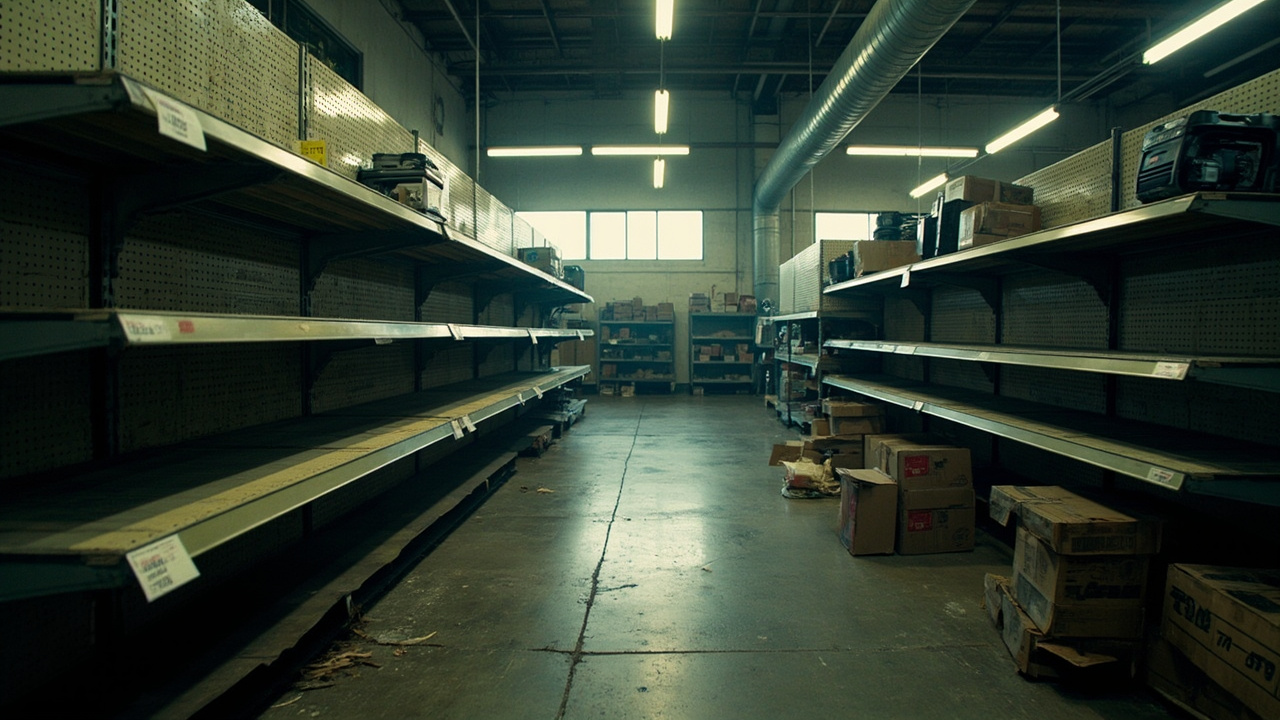
TL;DR: Portable generators sold out across Hawai‘i’s Big Island during recovery from Tropical Storm Lala, leaving residents without grid power dependent on online orders and neighbor loans while others were asked to delay purchases.
Big Island stores run dry after Lala
Portable generators were in short supply on Hawai‘i’s Big Island as residents continued recovering from Tropical Storm Lala, according to The Cooldown.
The shortage surfaced in a local Reddit discussion after one resident said a backup unit failed during the blackout. The original poster asked about inventory at Home Depot and Lowe’s and said the household’s grid power had returned after the unit stopped working on Sunday.
Replies described scarce inventory across the island. Several participants said regular store shelves were effectively empty and that ordering for delivery was the only realistic option.
One resident said a generator previously purchased from Walmart had been shipped directly to a home. Another participant said a Facebook thread tracking stock showed everything sold out until next containers arrive, and that a replacement had been ordered from Costco with delivery expected the following week.
The thread did not list a restock date for Home Depot, Lowe’s, or other island retailers. Residents said they were pooling updates from stores, Facebook posts, and one another to determine when inventory might return.
Residents ask powered households to wait
A central message in the discussion was restraint. One participant asked people whose electricity had returned to postpone buying a generator because many households remained without power, according to The Cooldown.
That appeal reflected different stages of recovery on the same island. Some households were using the outage as a reason to secure backup power before a future storm rather than begin another last-minute search, while households still in the dark needed a unit immediately for refrigeration, water pumps, medication storage, communication, and safety.
The same report noted that extreme weather can quickly strain everyday necessities in places where replacement goods depend on shipping schedules. On islands, residents who face a local sellout may have to wait for the next shipment rather than drive to another town or a neighboring county.
One commenter who ordered through Walmart said the first unit had quality problems while the replacement performed well, underscoring why buyers were comparing notes on retailers, shipping times, and reliability before ordering.
Federal emergency help covered Aug. 14-16 impacts
Federal disaster assistance was made available to Hawai‘i to supplement state and local response efforts for emergency conditions resulting from Hurricane Lala from Aug. 14-16, 2026, according to FEMA.
FEMA said the assistance was for Hawai‘i County. The agency was authorized to identify, mobilize, and provide equipment and resources considered necessary to alleviate emergency impacts.
Emergency protective measures were limited to direct federal assistance at 75% federal funding. Hirokazu Toiya was named the Federal Coordinating Officer for federal response operations in the affected area.
The declaration said designations could be made at a later date if requested by the state and warranted by further damage assessments. The action was intended to coordinate federal relief efforts, save lives, protect property, public health and safety, and lessen or avert the threat of catastrophe.
Fallen trees explain prolonged grid damage
Tropical Storm Lala passed south of the Hawaiian Islands and toppled hundreds of trees, which fell on power lines, homes, vehicles, and roadways, according to the Honolulu Star-Advertiser.
On O‘ahu alone, the City and County of Honolulu received close to 500 calls for tree debris removal beginning the previous weekend. People reported more than 120 fallen trees and branches in city parks, including two legacy ironwoods near Kapi‘olani Regional Park described as exceptional.
Trees also fell at Kapi‘olani Regional Park, on Kapiolani Boulevard near Kalakaua Avenue, near the Barefoot Beach Cafe in Waikiki, and onto cars parked off Punahou Street. A large century-old banyan at Punahou Square in Makiki fell into the fence of an off-leash dog park, which remained closed until removal and repair.
In Ewa Beach, a tree believed to be a kiawe fell across North Road and became entangled with active power lines. Crews contracted by HECO worked on restoring a utility pole there on Wednesday after residents waited for days, with access limited to a detour via Iroquois Drive for school and work travel.
Freezer losses raised stakes for backup power
Food loss emerged as one of the largest immediate household costs during extended outages. A Big Island resident reported more than 200 pounds of meat in a deep freezer after 24 hours without electricity, according to The Cooldown.
The request was posted on r/BigIsland by a Hawaiian Paradise Park resident. The household sought a generator to rent long enough to lower freezer temperatures or information about where to obtain ice on the east side.
Options discussed included securing a generator, finding ice, or cooking the food before it spoiled. If the meat could not be saved, one commenter suggested giving it to Amedeo Markoff, who runs the Pāhoa Lava Zone Museum and Community Kitchen.
One commenter wrote that a full freezer left unopened should remain safe for 48 hours. The Hawai‘i Public Health Institute separately advises keeping appliance thermometers in refrigerators and freezers to support later food-safety decisions.
Another neighbor offered to loan a 4KW generator for a few hours, noting that moving it into a truck bed would require two people. The original poster later updated the thread to say the household was looking for ice after not gaining access to a generator.
Neighbor advice: one to two hours can protect a freezer
Neighbors responding to the Hawaiian Paradise Park appeal emphasized conserving cold rather than running a generator continuously, according to The Cooldown.
One neighbor wrote that one to two hours per day with a generator could keep food below freezing. The same participant advised draping the unit with blankets and keeping it out of direct sun.
The report described a full freezer as representing months of groceries, hunting, fishing, bulk purchases, and meal preparation. When power remains out for a day or more, that stored investment faces risk from unsafe temperatures.
The Hawai‘i Public Health Institute advises freezing containers of water and gel packs before a storm and keeping a cooler available, noting that a full freezer helps food stay frozen longer after power fails.
For households storing large quantities of food, the discussion framed backup power as an investment to weigh against potential loss in a single outage. For some families, even short-term backup operation could protect substantial food from waste.
Standby unit ran for days but needed oil
A separate Hawai‘i Island case showed that standby power can carry a household through a multiday outage when maintenance stays on schedule, according to The Cooldown.
A homeowner said a year-old Generac 22-kilowatt unit kept a three-person household operating while the grid was down. The home used a 250-gallon propane tank that began a little above 70% full and used about 5% over a little more than a day.
Another user warned that the unit needed shutdown every 24 hours to check oil level. The homeowner agreed to perform the check, then reported adding a small amount of oil before the generator resumed normal operation.
Grid power later returned with the propane tank at 30%. The homeowner planned service for oil, filter, plugs, and related items and said the household reviewed the manual and watched a video to learn safe checking procedure during heavy rain.
One commenter described oil and filter parts every 200 hours as inexpensive protection compared with a failed standby unit. Another participant said outages can last ten minutes or ten days, making fuel resupply planning important before rather than during an outage.
Use generators outdoors and plan medical needs
Portable generators produce carbon monoxide, an invisible and odorless gas that can be deadly within minutes, according to the Hawai‘i Public Health Institute.
The institute says to operate generators only outdoors and far from buildings, never in a home, garage, carport, or balcony, and never near a door, window, vent, or sleeping area.
Households relying on oxygen concentrators, CPAP machines, powered wheelchairs, or refrigerated medications such as insulin should plan for outages that can last days or longer. The institute advises discussing backup-power options with a provider, identifying where to go to keep equipment running, and considering registration with the utility as a medically vulnerable customer.
Medication planning includes keeping at least a two-week supply when possible, refilling before a forecast storm when supplies run low, and storing a written list of medications, doses, pharmacy information, insurance and identification copies, and emergency contacts including a doctor.
Storm preparation also includes monitoring forecasts through the National Hurricane Center and the National Weather Service Honolulu office, following county emergency-management guidance, assembling water, nonperishable food, radio, flashlight, batteries, first-aid supplies, sanitation items, manual can opener, tools, maps, extra eyeglasses or hearing-aid batteries, and checking on kūpuna, neighbors living alone, and friends with health conditions or disabilities before power fails.
What Big Island buyers can do now
Track inventory through multiple channels. Residents monitored Home Depot, Lowe’s, Walmart, Costco, Facebook stock threads, and Reddit updates because no single island source showed available units, according to The Cooldown.
Consider delivery lead time. Walmart direct shipment and Costco delivery the following week were reported as alternatives when shelves were empty. Buyers should confirm delivery dates, fuel type, wattage needs, return terms, and warranty service before ordering.
Size power to priority loads. A small inverter can support cycling a refrigerator, freezer, lights, and device charging for extended periods, while larger loads increase fuel demand. Decide which appliances truly require power before purchasing fuel or storage containers.
Plan fuel and maintenance together. Standby owners needed oil checks during extended operation and retained oil, filters, and plugs. Portable owners should store fresh fuel, track treatment dates, and ration electrical use when resupply is uncertain.
Protect cold first when power fails. Keep freezer doors closed, use a cooler and frozen water containers, and use a borrowed or rented generator for brief cooling cycles when available. Seek ice early on the east side and other affected areas when generator access is unavailable.