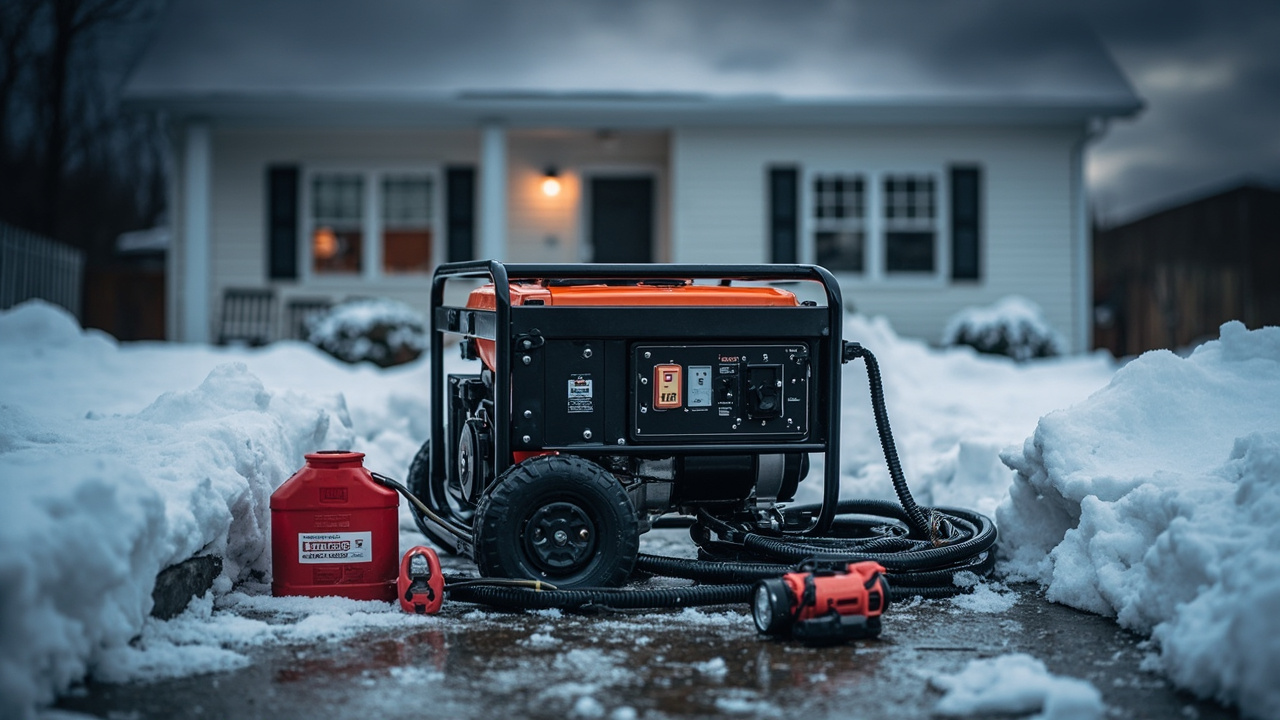
TL;DR: Inspect oil, fuel, cords, and alarms before severe weather, run the generator monthly under load, and operate it outside only, far from openings.
Why fall inspection comes first
A portable unit can present carbon monoxide, fire, electrical, burn, and fuel-related hazards when use or upkeep is incorrect, according to the Portable Generator Maintenance Safety Checklist for Winter Storm Season. That Sept. 12, 2026 checklist directs owners to follow the current owner's manual, local requirements, and instructions from emergency responders or qualified technicians.
The same guidance notes that OSHA lists shock and electrocution, carbon monoxide, fire, fuel storage, noise, and vibration as generator-related hazards. OSHA also publishes a portable-generator safety publication with general workplace safety information.
Inspection before severe weather is the core recommendation. Old or degraded fuel, low oil, a dirty air filter, a worn spark plug, a weak battery, damaged cords, cracked fuel lines, loose connections, or leaks can affect operation or create hazards, depending on model. The checklist warns against assuming one maintenance schedule fits every generator.
Stop using a unit that leaks fuel, sparks, overheats, or fails a manufacturer-permitted test run, and have a qualified technician inspect it. Do not attempt repairs beyond personal skill or beyond the manufacturer's instructions.
The Portable Generator Maintenance Checklist: Monthly, Yearly, and Before Storage, published Sept. 9, 2026 by Grant Mercer, frames the same problem in practical terms. It states that a unit that will not start in a storm commonly has stale gasoline gumming the carburetor, unchanged oil, or a dead starter battery on an electric-start model. It recommends a monthly run under load, an oil change every 50 to 100 hours or once a year, and either fuel stabilizer or an empty carburetor between uses.
Fuel system: degraded gasoline causes most no-starts
Gasoline starts to degrade in about 30 days, according to Power Backup Lab. Ethanol-blended gasoline absorbs water from air, separates, and leaves varnish inside the carburetor jets. A generator that operated normally in October can therefore fail in February because stored gasoline left deposits.
Stabilizer is one control. Add stabilizer to the gas can when filling, not only to the generator tank. Stabilized fuel stays usable for 12 to 24 months depending on the product. Run the generator 10 minutes after adding stabilizer so treated fuel reaches the carburetor.
Running the carburetor dry before storage is a second control. Shut the fuel valve while the engine is running and allow the engine to stall. The bowl empties and leaves nothing to form varnish. Many manuals recommend the procedure, and it takes three minutes.
Ethanol-free gasoline is a third control. It is sold at many marinas, farm stores, and some gas stations. It costs more, stores longer, and is easier on small-engine carburetors. Dual-fuel generators using propane avoid stale-fuel deposits because propane does not go stale and liquid fuel does not enter the carburetor.
Williams Hart & Boundas adds storage rules for safety. Store fuel in approved containers and follow applicable fire-safety requirements and manufacturer instructions. Keep fuel away from ignition sources and living areas. Never store gasoline inside a home, basement, or other enclosed area where vapors could collect.
Turn off a gasoline generator and allow it to cool as the owner's manual directs before refueling. Never refuel a hot or running unit. Keep flashlights, batteries, carbon-monoxide-alarm batteries, and a fire extinguisher suitable for surrounding hazards available.
A weather cover must be designed for the generator. Do not operate under a cover unless the manufacturer expressly permits that use. A cover must not block ventilation or trap exhaust.
Oil, filter, plug, battery, and cords
Most portable generators hold less than a quart of oil and have no oil filter, Power Backup Lab reports. That small volume becomes contaminated quickly. Low oil is the most common cause of a seized engine. Generators sold in the last decade include a low-oil shutoff, which can produce a distinct symptom: the unit starts, runs 10 seconds, and stops. Check oil first when that occurs.
Change oil in a new unit after the first 5 to 20 hours to remove metal particles from initial wear. Make regular changes every 50 to 100 hours or once a year, whichever comes first. Inverter generators often specify 100 hours, while open-frame units often specify 50 hours. SAE 10W-30 suits most climates, while synthetic 5W-30 aids winter starting in northern areas. Drain warm, not hot, after running five minutes so oil flows, then tilt the unit toward the drain plug to remove remaining oil.
Williams Hart & Boundas directs owners to check oil as the manufacturer directs and use the oil type listed in the owner's manual. It also calls for inspection of cracked fuel lines, loose connections, rust, leaks, and housing damage. Clean or replace the air filter as the manual directs. Inspect the spark plug, battery, recoil starter, controls, and other visible parts.
Power Backup Lab specifies annual air-filter and spark-plug checks. Wash a foam filter in soapy water, dry it, and oil it lightly once a year or every 50 hours, sooner in dusty conditions. Tap paper elements clean or replace them. A clogged filter causes rich running, black smoke, fouled plugs, and lost power under load.
Pull the spark plug annually. A light-tan electrode indicates normal condition. A black and sooty electrode indicates a rich mixture or dirty air filter. A white and blistered electrode indicates hot or lean operation, often from a partially clogged carburetor jet. Set the gap to the manual specification, usually 0.028 to 0.031 inches, and replace the plug every two years regardless. Keep a spare plug and correct socket in the storage bin.
Small starter batteries self-discharge and can be flat after two to three months of sitting. The monthly run charges the battery, or a float charger can maintain it continuously.
Examine extension cords for cuts, fraying, exposed wires, heat damage, or loose plugs. Use outdoor-rated cords with load ratings matched to the generator and connected appliances. Do not use damaged cords or overload the generator. Follow the owner's manual for grounding and bonding, and do not alter internal grounding or bonding components without qualified help.
Monthly and seasonal test routine
A two-minute check at every use covers oil level, fuel leaks, cords, and outlets. The monthly task takes 30 minutes: start and run 20 to 30 minutes under at least 50 percent load while charging the starter battery.
Idling for five minutes is better than no test, but it does not bring the engine to full temperature. Moisture then remains in oil and the crankcase. Idling also does not exercise the alternator, breakers, or voltage regulator.
Use substantial load instead. A 1,500-watt space heater plus a work light provides an appropriate load for a 3,000-watt unit. Two heaters suit a 6,000-watt unit. Loaded operation removes moisture, keeps seals pliable, moves fuel through the carburetor, and confirms power production. Voltage sag or engine surge under that load reveals a problem before an outage.
Service at 50 hours or annually includes oil and air-filter work and takes about 20 minutes. Service at 100 hours or annually includes spark-plug inspection and gapping, spark-arrestor cleaning, and valve-clearance inspection on OHV engines if the manual calls for it, taking about 30 minutes. Service at 300 hours or two years includes spark-plug replacement, fuel-filter replacement if equipped, and fuel-line inspection for cracking, also taking about 30 minutes.
Before storage longer than 30 days, add fuel stabilizer and run 10 minutes, or drain the tank and run the carburetor dry, taking about 15 minutes. A seasonal fall and spring test takes about one hour and covers every outlet, the transfer switch or inlet, the carbon-monoxide shutoff if testable, and fresh fuel.
Place the unit outside and keep exhaust clear
Carbon monoxide is an invisible, odorless gas that can cause serious injury or death. The CPSC generator-safety page advises using portable generators outside only, far from the home and from windows, doors, vents, or other openings.
Never operate a portable generator inside a home, garage, basement, crawl space, shed, porch, carport, or any other enclosed or partially enclosed area. Opening a door, window, or garage door does not make operation safe.
Install and test carbon-monoxide alarms according to the alarm manufacturer's instructions and applicable local requirements. If someone develops possible poisoning symptoms, move to fresh air immediately if it can be done safely and call 911. Listed symptoms can include headache, dizziness, weakness, nausea, vomiting, chest pain, confusion, or tiredness. Do not return until trained and properly equipped personnel determine the area is safe.
Snow and ice may obstruct ventilation or affect exhaust flow after starting. Monitor the unit during an outage and follow the owner's manual and current emergency guidance as conditions change.
Prevent fire, shock, and backfeed
Place the generator on a stable, dry, level surface and prevent water from collecting around it. Keep it away from combustible materials, children, and pets. Never plug a portable generator into a wall outlet or connect it directly to household wiring because backfeeding can energize utility lines and seriously injure or kill workers.
For house wiring, use properly rated, listed transfer or interlock equipment installed by a qualified or licensed electrician. The electrician should follow applicable codes and generator-manufacturer instructions. Do not touch wet electrical equipment or operate the generator in standing water. Follow the owner's manual before covering, moving, shutting down, or restarting.
Sources referenced
- Portable Generator Maintenance Safety Checklist for Winter Storm Season | Williams, Hart & Boundas, LLP (https://whlaw.com/blog/central-southern-winter-storm-prep-september-2026/)
- Portable Generator Maintenance Checklist: Monthly, Yearly, and Before Storage - Power Backup Lab (https://powerbackuplab.com/portable-generator-maintenance-checklist/)